Commercial Storm Damage

Commercial Storm Damage in Spring Hill, IN

Spring Hill's Commercial Storm Damage Response Team, On Scene Within 2 Hours When Indiana Weather Strikes Hard

Call (317) 676-4257Get Free Quote
Quick Answer

Spring Hill Water Restoration provides commercial storm damage in Spring Hill, IN. 24/7 emergency response with IICRC-certified crews. Most claims are covered by homeowner's insurance and we work with your insurance carrier on approved claims. Call (317) 676-4257 for immediate dispatch.

  • Service: Commercial Storm Damage for Spring Hill homeowners
  • Service area: Spring Hill, IN and surrounding areas
  • Response time: Within 2 hours response for Spring Hill inquiries
  • Licensed and insured (License #RC21100059)
  • Serving Spring Hill, IN since 2018
Commercial Storm Damage Services

Expert Commercial Storm Damage for Spring Hill Homeowners

When a severe Indiana thunderstorm tears through Spring Hill and water is pushing under your commercial facility's doors, every hour you wait is an hour that saturated drywall, soaked insulation, and pooling water are compounding your losses. Businesses along the Michigan Road Corridor know how quickly wind driven rain can overwhelm flat roof drains and force Category 2 gray water into finished interior spaces. Category 3 black water from storm backed drainage is an even faster escalating threat. Mold colonizes within 24 to 48 hours of initial saturation, and insurance carriers expect documented mitigation to begin promptly. Waiting until the next business morning is not a neutral choice. It is a choice that expands both the damage and the remediation cost.

Our Team dispatches to Spring Hill commercial properties within 2 hours of your call, any day, any time of year. When tornado season runs from April through June across Marion County, we do not reduce our readiness, we increase it. The licensed crew arrives in fully loaded service vehicles carrying commercial water extraction equipment, professional air movers, and commercial dehumidifiers sized for large square footage. We radio ahead when we are en route so your facility manager knows exactly when to expect us and can have access points ready. No waiting for a callback, no scheduling window. A real person takes the call, confirms your Spring Hill address, and sends the crew moving.

The moment our licensed crew sets boots inside your Spring Hill facility, a formal inspection begins that follows the IICRC S500 Water Damage Restoration standard. We use thermal imaging to identify moisture hidden inside wall cavities, above drop ceilings, and beneath concrete slabs where visual inspection alone cannot reach. Moisture meters then quantify the saturation level at each affected surface. This produces a moisture map of the entire structure, a documented picture of exactly where water has migrated. That map governs every equipment placement and every structural drying calculation we perform. Nothing is estimated. Nothing is guessed. The IICRC S500 Water Damage Restoration framework requires this level of documentation, and we follow it for every Marion County commercial loss.

Active extraction comes first. Commercial water extraction equipment pulls standing water from concrete floors, carpet, and subflooring across your entire affected footprint before drying equipment is positioned. For properties near the Wynnedale Spring Hill border area, where older construction sometimes pairs brick facades with wood framed interiors, that sequence matters enormously because wood loses structural integrity fast under prolonged saturation. Once extraction is complete, professional air movers and commercial dehumidifiers are arranged according to the structural drying calculations we prepared during inspection. Day one focuses on surface water removal. Days two through four focus on deep structural drying. A Category 1 clean water loss typically reaches complete drying in 3 - 5 days. Category 2 and 3 losses extend that timeline based on material porosity and contamination scope.

Storm damage claims at Spring Hill commercial properties move faster when documentation is airtight from the first hour. Our Team compiles moisture readings, equipment logs, photo documentation, and scope of work reports formatted specifically to support your claim with your insurance carrier. We coordinate with your adjuster directly, answering technical questions about water category classification, affected square footage, and drying progress so you are not translating restoration language for someone unfamiliar with it. Most major insurance carriers cover sudden storm water intrusion when mitigation is documented and begins promptly. We work with your insurance carrier throughout the process, keeping communication clear on both sides. You focus on keeping your business running. We handle the technical conversation.

If water is inside your Spring Hill commercial property right now, do not wait to see how bad it gets. Call us immediately. Our Team dispatches within 2 hours to properties across Spring Hill, including Knoll Condominiums, properties along Cold Spring Road, and the Michigan Road Corridor. The inspection is free and carries no obligation. We will tell you exactly what category of loss you are facing, what equipment is needed, and what your timeline looks like before any work begins. Pick up the phone right now and get a crew moving toward your facility.

When to Call

Signs You Need Commercial Storm Damage

If you notice any of these in your Spring Hill home, schedule a free inspection before the issue worsens.

Standing water visible on your Spring Hill commercial facility floor after a severe Indiana thunderstorm passed through.

Ceiling tiles in your main workspace are sagging, discolored, or actively dripping following heavy hail and wind.

Your Spring Hill building's roof drain or gutter system overflowed and pushed water behind exterior wall assemblies.

A tornado warning during April through June led to window or door seal failures and water entered the interior.

Musty odors appeared within 24 to 48 hours after storm rainfall, suggesting saturation inside wall cavities.

Your HVAC air handling unit in a rooftop or utility area took on water and is distributing moisture through ductwork.

Spring Hill commercial tenants are reporting wet flooring, wet furniture, or visible mold growth after a weather event.

Moisture is visibly wicking up drywall from the baseboard level after wind driven rain saturated the building perimeter.

Electrical panels or conduit runs in your facility show moisture intrusion or tripped breakers following storm flooding.

Your facility sits along the Michigan Road Corridor where storm runoff from adjacent impervious surfaces pooled against your foundation.

Our Process

How Spring Hill Water Restoration Handles Commercial Storm Damage

Every job follows the same three-step process. Transparent, thorough, and done right the first time.

1

Emergency Dispatch and Arrival

Within 2 hours of your call, our licensed crew is in transit to your Spring Hill commercial address. We confirm your location, note building access requirements, and arrive ready to work. No assessment delays at the shop. The crew begins documentation as they move through your facility the moment they are on site, so no time is wasted between arrival and active work.

2

Moisture Mapping and Inspection

Using thermal imaging and moisture meters, we build a complete moisture map of your affected commercial space following the IICRC S500 Water Damage Restoration standard. This identifies water migration inside wall assemblies, above ceilings, and beneath flooring that is invisible to the eye. We classify the water category, calculate structural drying targets, and document everything before extraction equipment is placed.

3

Extraction and Contamination Control

Commercial water extraction equipment removes standing water from every affected surface across your facility's footprint. If Category 2 or Category 3 water is present, containment barriers are established to protect unaffected areas from cross contamination. HEPA filtration is deployed when contaminated water or storm debris has introduced airborne particulates that could affect employee or tenant health during the mitigation process.

4

Structural Drying and Monitoring

Professional air movers and commercial dehumidifiers are positioned according to structural drying calculations derived from the moisture map. Our team returns to your Spring Hill property daily to take moisture readings, adjust equipment placement, and confirm drying progress is tracking on schedule. Category 1 losses typically complete in 3 - 5 days. Category 2 and 3 losses are monitored until all readings reach acceptable dry standard benchmarks.

5

Verification, Rebuild, and Closeout

Post drying verification confirms all moisture readings match pre loss dry standard benchmarks before equipment is removed. Any controlled demolition of unsalvageable materials completed during mitigation is documented for your insurance carrier. Our team then moves directly into reconstruction on a single unified schedule, so your Spring Hill commercial property reaches full operational condition without a handoff gap between mitigation and rebuild phases.

Real Project Photos

Commercial Storm Damage in Spring Hill

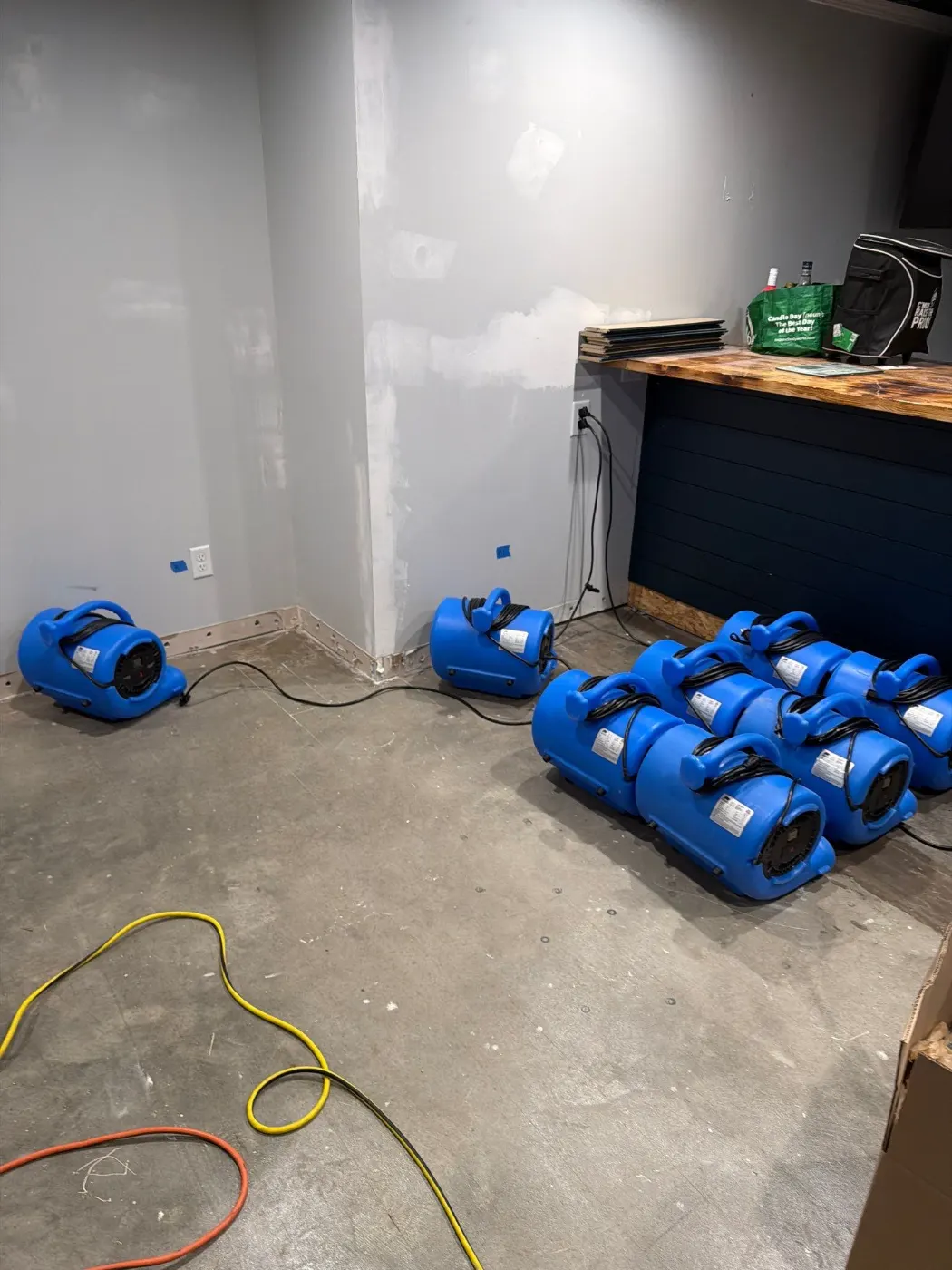
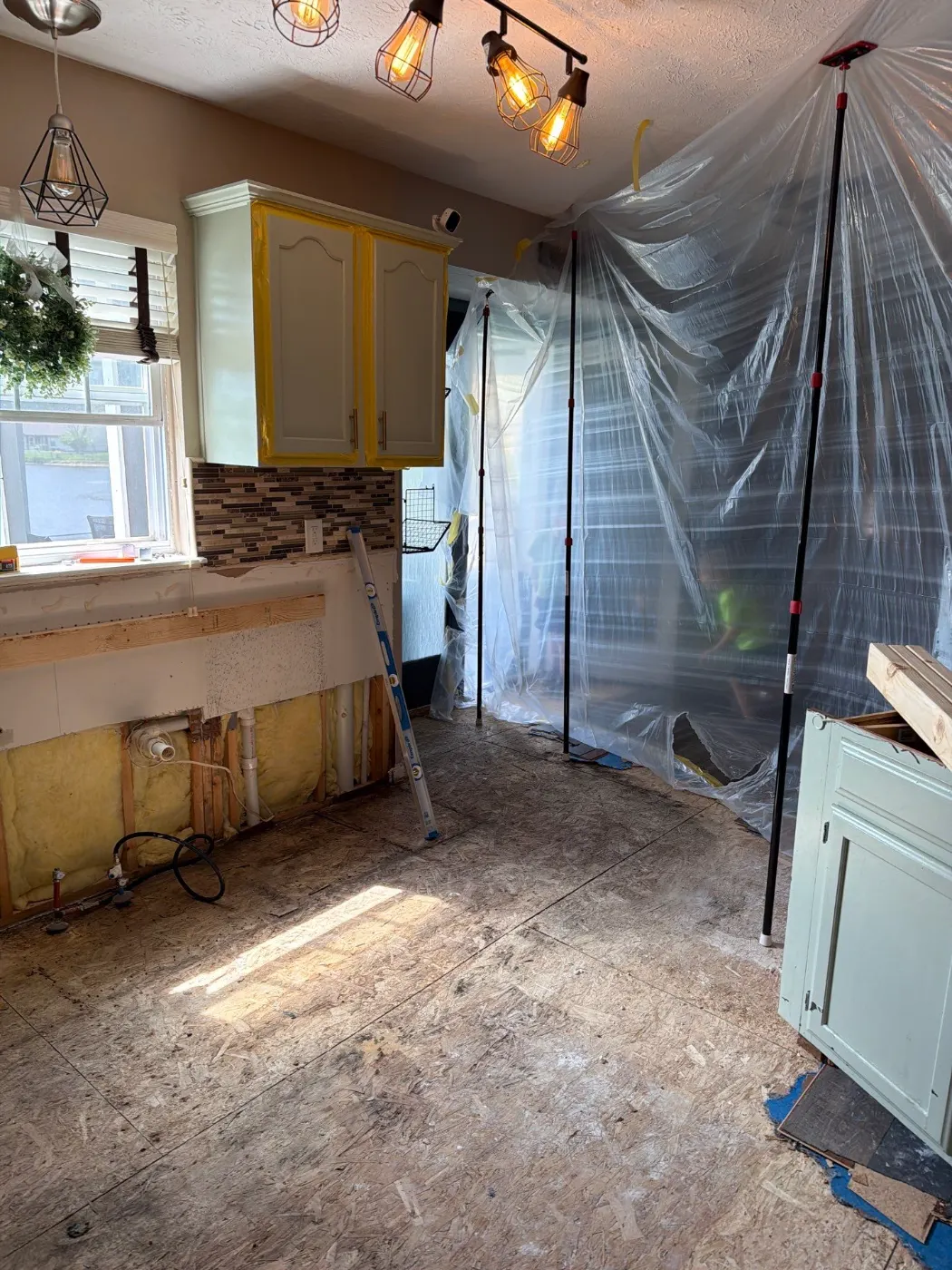
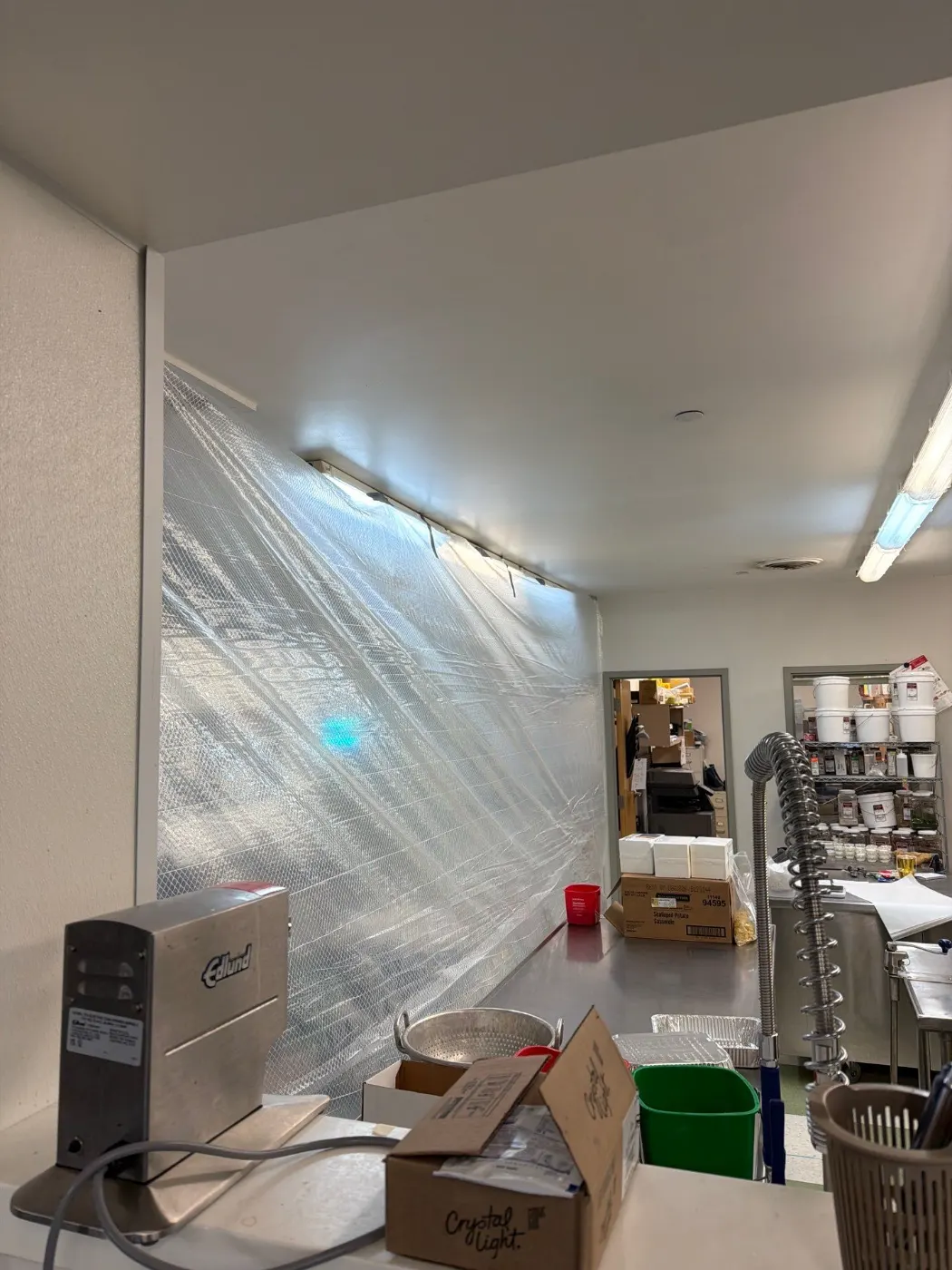
Photographs from real commercial storm damage jobs completed by our crew in Spring Hill and surrounding areas.
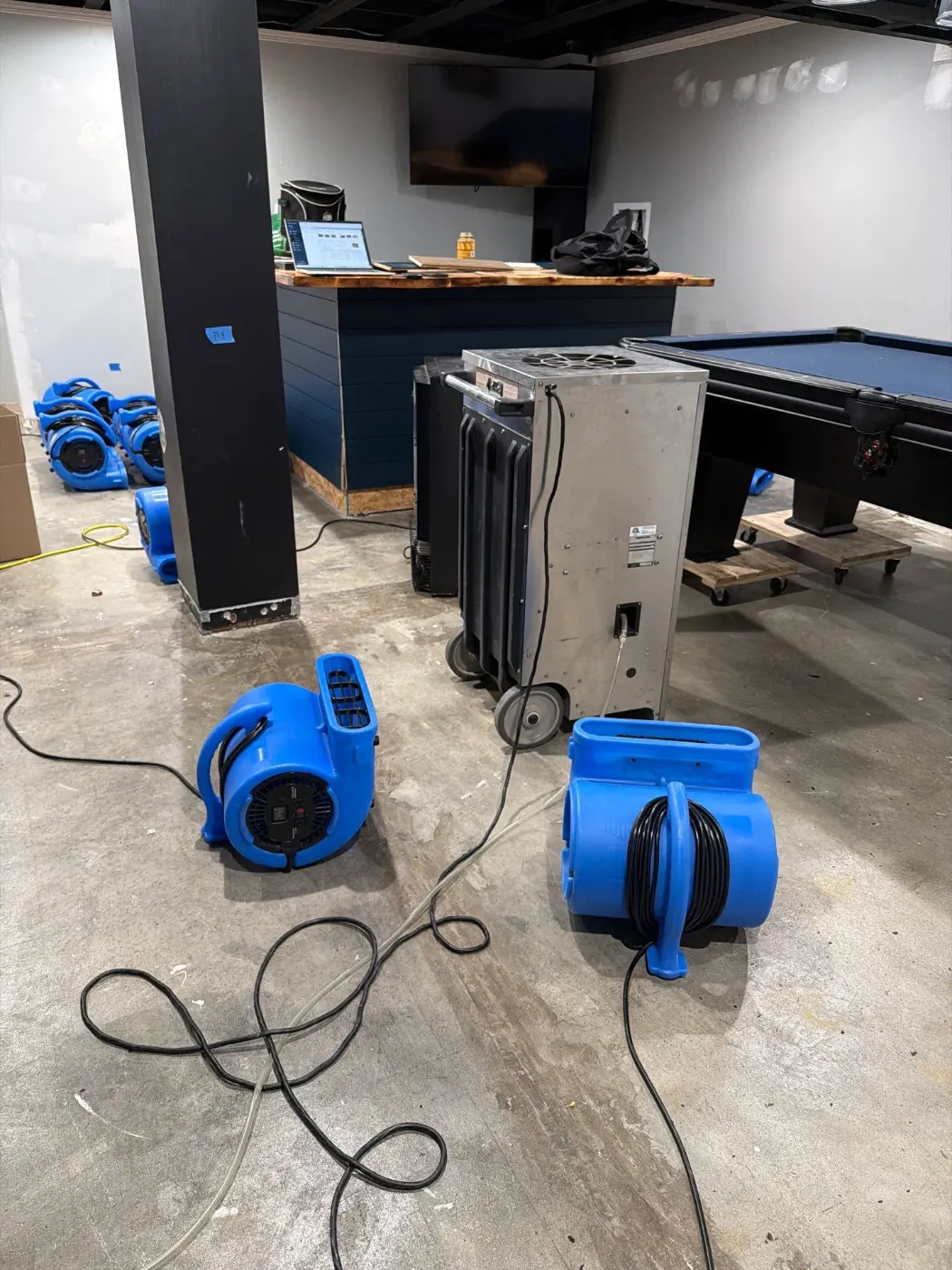
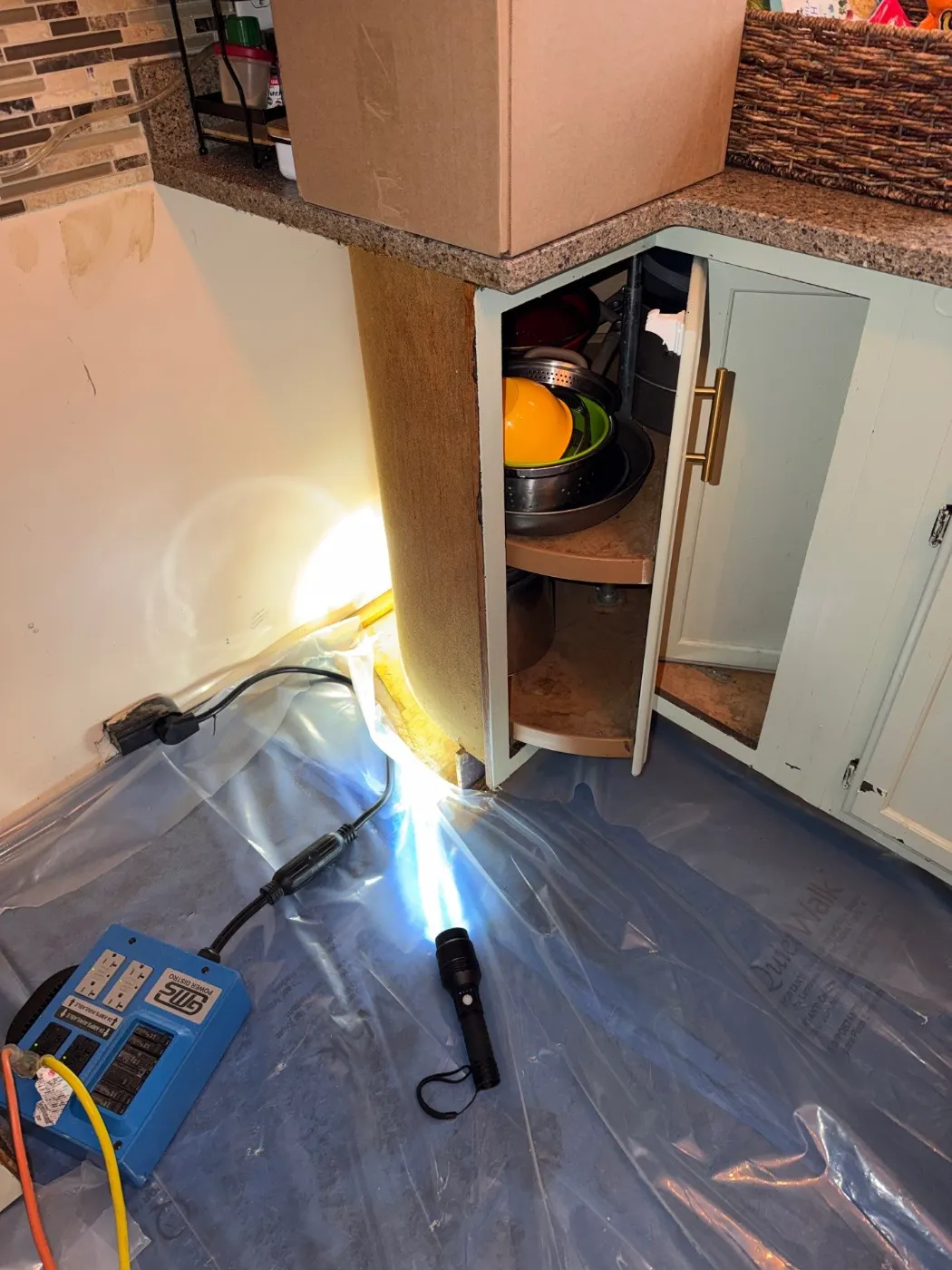
Water restoration project completed in Spring HillIICRC-certified dry-out in progress at Spring Hill homeResidential restoration project in Spring Hill, Hamilton County IndianaCertified restoration crew at work on Spring Hill residence
Common Questions

Commercial Storm Damage FAQ

Questions we hear most often from Spring Hill homeowners considering commercial storm damage.

Within 2 hours of your call, our licensed crew is dispatched and moving toward your Spring Hill commercial property. We maintain dispatch readiness throughout tornado season, April through June, and across the full Indiana severe thunderstorm and hail season. When you call, a live team member answers, confirms your address, and sends the crew without a callback delay. Properties along the Michigan Road Corridor and near Knoll Condominiums fall within our primary Spring Hill service zone, so drive time is not a limiting factor. The 2 hour window begins from your first call, not from when paperwork is signed.
Commercial storm damage restoration costs in Spring Hill typically run 2 - 5 times residential scope because of larger square footage, higher grade materials, and business interruption considerations. For Category 1 clean water losses, most commercial projects fall in the range of $3,000 - $22,500. Category 2 gray water losses, which are common when storm drain backup is involved, typically run $6,000 - $40,000. Category 3 black water losses involving sewage contaminated storm water can reach $14,000 - $125,000 or more depending on affected area size. These are ranges, not guarantees. We provide a documented scope estimate before work begins so there are no surprises for your facility budget or your insurance carrier.
Most major insurance carriers cover sudden and accidental storm water intrusion when the cause is a covered weather event and mitigation begins promptly with proper documentation. Spring Hill commercial properties impacted by severe Indiana thunderstorms, hail damage, or tornado season wind events typically meet that covered event standard. Gradual water intrusion from deferred maintenance, such as a roof that has been leaking slowly for months, is usually excluded. We work with your insurance carrier by providing complete moisture documentation, category classification, equipment logs, and a detailed scope of work. Your deductible still applies, and policy language governs what is covered. We coordinate with your adjuster to make sure the technical information they need is provided clearly and promptly.
Yes. Our Team follows the IICRC S500 Water Damage Restoration standard on every commercial storm damage project we handle in Spring Hill and across Marion County. The IICRC S500 Water Damage Restoration standard defines the industry protocols for water category classification, moisture mapping, structural drying calculations, and post drying verification. Certification means our licensed crew is trained to those standards and applies them on actual job sites, not just in a classroom. For commercial property managers and facility directors, that matters because insurance carriers and independent adjusters recognize IICRC certified work as meeting the accepted industry benchmark for defensible, documented mitigation.
Duration depends on water category, affected square footage, and material types in your Spring Hill commercial facility. Category 1 clean water losses in typical commercial spaces reach drying completion in 3 - 5 days. Category 2 gray water losses involving building materials with higher porosity, such as older wood framed structures near the Wynnedale Spring Hill border area, typically run 5 - 7 days. Category 3 black water losses that require controlled demolition of contaminated materials before drying can begin may extend to 7 - 14 days before reconstruction starts. We monitor moisture readings daily and give your facility manager updated timeline projections at each visit so operational planning is not left to guesswork.
Our Team handles all three IICRC water categories in Spring Hill commercial properties. Category 1 is clean water from a supply line break or rainwater intrusion through a roof breach before it contacts contaminated surfaces. Category 2 is gray water, which carries biological or chemical contamination and includes storm drain overflow and HVAC condensate that has been standing. Category 3 is black water, the highest contamination level, which includes sewage backed storm water and flooding that has been standing long enough to develop harmful microbial growth. Category 3 requires protective protocols, controlled demolition of contaminated porous materials, and HEPA filtration during work. We classify the water present on arrival and build the entire scope around that classification.
Mold colonizes within 24 to 48 hours of initial water saturation when temperatures and moisture levels are favorable, which describes most Spring Hill commercial spaces in the warm months surrounding tornado season. The concern is not just surface mold you can see. Mold growing inside wall cavities or above drop ceilings in your facility can remain invisible for weeks while spreading. Our approach is to begin extraction and drying fast enough to keep materials below the moisture threshold where mold colonization begins. If mold is already present when we arrive, we document it, contain the affected area, and address it as part of the mitigation scope rather than treating it as a separate future project.
First, if there is any possibility of electrical hazards from water near panels or outlets, do not enter those areas. Contact your utility provider and shut off power to affected zones if it is safe to do so from an unaffected location. Second, document everything with photos and video before anything is moved or touched. Your insurance carrier will want a record of initial conditions. Third, if it is safe to enter, move undamaged inventory, equipment, or records out of the water path to prevent additional losses. Fourth, do not run standard building HVAC across the wet areas. Circulating warm air through saturated spaces before commercial dehumidifiers are in place can accelerate mold growth rather than drying the structure.
Our licensed crew arrives at Spring Hill commercial properties with commercial water extraction equipment capable of removing large volumes of standing water from concrete, carpet, and hard flooring across wide open commercial footprints. We bring commercial dehumidifiers scaled to the cubic footage of your affected space, not residential units that are inadequate for a 10,000 square foot warehouse or office floor. Professional air movers accelerate surface evaporation from walls and flooring between dehumidifier pulls. Thermal imaging cameras identify hidden moisture pockets that surface inspection misses. Moisture meters give us the quantified readings we need to track drying progress against structural targets and confirm when drying is genuinely complete rather than visually complete.
Our Team handles both mitigation and full reconstruction under a single project, and we consider that continuity a core part of how we serve Spring Hill commercial property managers. Mitigation removes the water, dries the structure, and prepares affected areas for rebuild. Reconstruction restores drywall, flooring, ceilings, insulation, and any structural components that required controlled demolition during mitigation. Having one licensed crew handle both phases means the team doing reconstruction already knows exactly what was removed, what was retained, and what the structure looked like before the storm. There is no handoff gap, no scheduling limbo between phases, and no contractor who shows up unfamiliar with what the mitigation crew found inside your walls.
Send a Message

Request Commercial Storm Damage

Contact Information

Reach Us Directly

Our team is available 24/7 for emergencies and ready to schedule inspections during business hours.

Hours
Available 24/7
Service Area
Spring Hill, IN and Surrounding Areas
License
RC21100059

Need Immediate Help?

For active water, fire, or mold emergencies, call us directly. We are available 24/7.

Call NowGet Quote