Commercial Flood Damage Cleanup

Commercial Flood Damage Cleanup in Spring Hill, IN

Spring Hill's Commercial Flood Cleanup Team Responding Within 2 Hours to Protect Your Business Assets

Call (317) 676-4257Get Free Quote
Quick Answer

Spring Hill Water Restoration provides commercial flood damage cleanup in Spring Hill, IN. 24/7 emergency response with IICRC-certified crews. Most claims are covered by homeowner's insurance and we work with your insurance carrier on approved claims. Call (317) 676-4257 for immediate dispatch.

  • Service: Commercial Flood Damage Cleanup for Spring Hill homeowners
  • Service area: Spring Hill, IN and surrounding areas
  • Response time: Within 2 hours response for Spring Hill inquiries
  • Licensed and insured (License #RC21100059)
  • Serving Spring Hill, IN since 2018
Commercial Flood Damage Cleanup Services

Expert Commercial Flood Damage Cleanup for Spring Hill Homeowners

When a burst pipe floods the lower level of a commercial building along the Michigan Road Corridor or a storm drain backs up into a retail space near Knoll Condominiums, the clock starts immediately. Spring Hill sits in Marion County, where late spring thunderstorms and rapid snowmelt push water into basements, mechanical rooms, and ground floor suites faster than most facility directors anticipate. Every hour that standing water remains in contact with concrete, drywall, carpet padding, and structural wood expands the damage zone. What begins as a contained loss can reach adjacent tenant spaces within hours. Acting before the water stops rising is not an overreaction. It is the only decision that protects your lease obligations, your inventory, and your building's structural integrity.

Our Team serving Spring Hill maintains a fully equipped response operation ready to dispatch within 2 hours of your call, any day of the week. When you contact us about a commercial flood event, we do not put you on hold waiting for a crew to become available. A licensed crew loads commercial water extraction equipment and heads toward your property while you are still on the phone with us. We cover all of Spring Hill and the surrounding Marion County area, including properties along Cold Spring Road and the Wynnedale Spring Hill border zone where older storm infrastructure tends to overwhelm during heavy rain events. You will have trained technicians on your floor assessing the loss before conditions deteriorate further.

The first task our licensed crew performs upon arrival is a full moisture mapping inspection of the affected area. We use thermal imaging cameras to detect moisture migration behind walls and under flooring that is invisible to the naked eye, and we verify every reading with calibrated moisture meters at multiple depths. This inspection framework follows IICRC S500 Water Damage Restoration standards, which define how water damage is categorized, how affected materials are classified, and how a drying plan is built around measured data rather than guesswork. Every affected surface is logged, every moisture reading is recorded, and a structural drying calculation is prepared before extraction equipment is positioned. Spring Hill commercial properties vary widely in construction age and material type, and our inspection accounts for that.

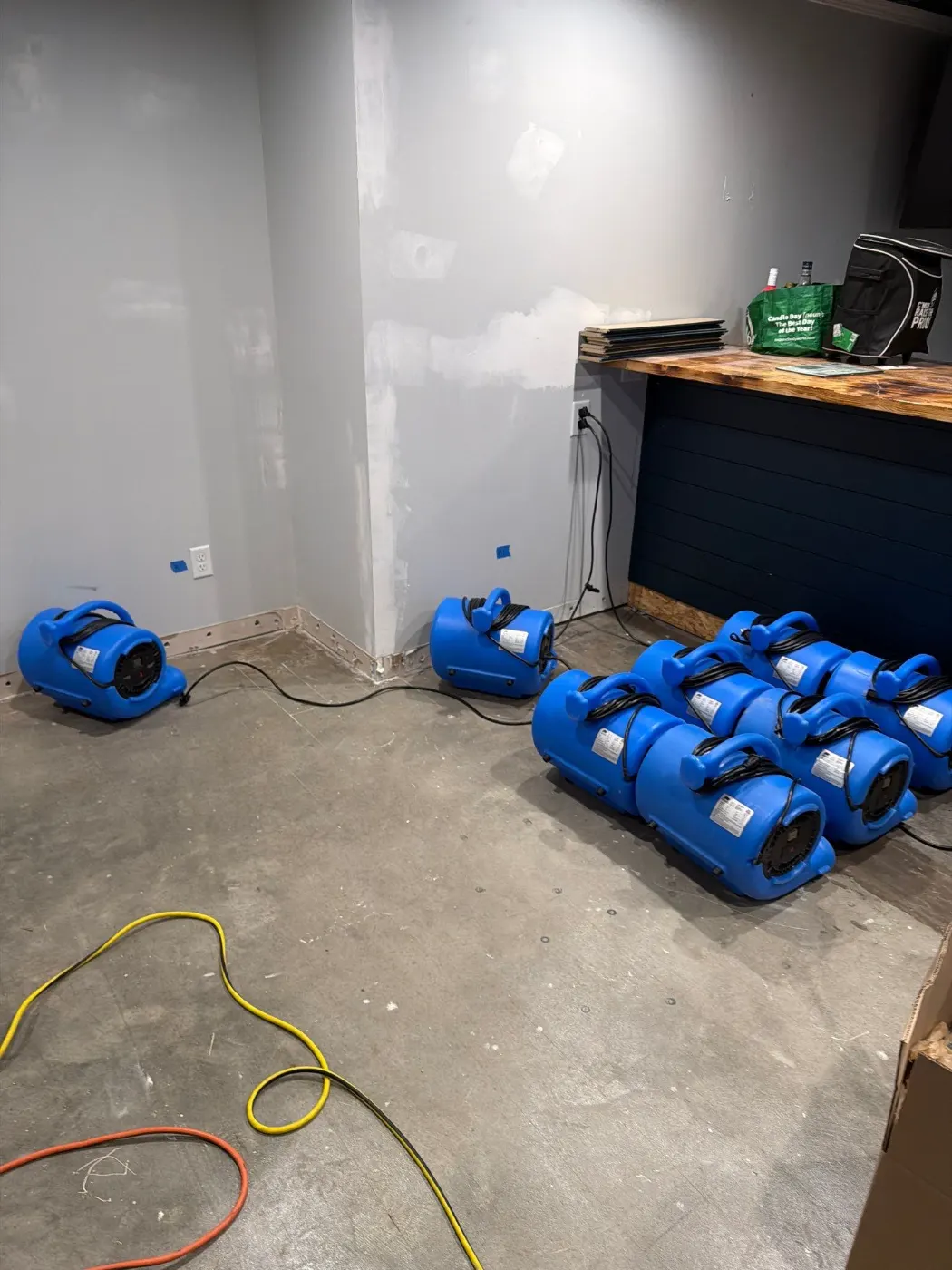
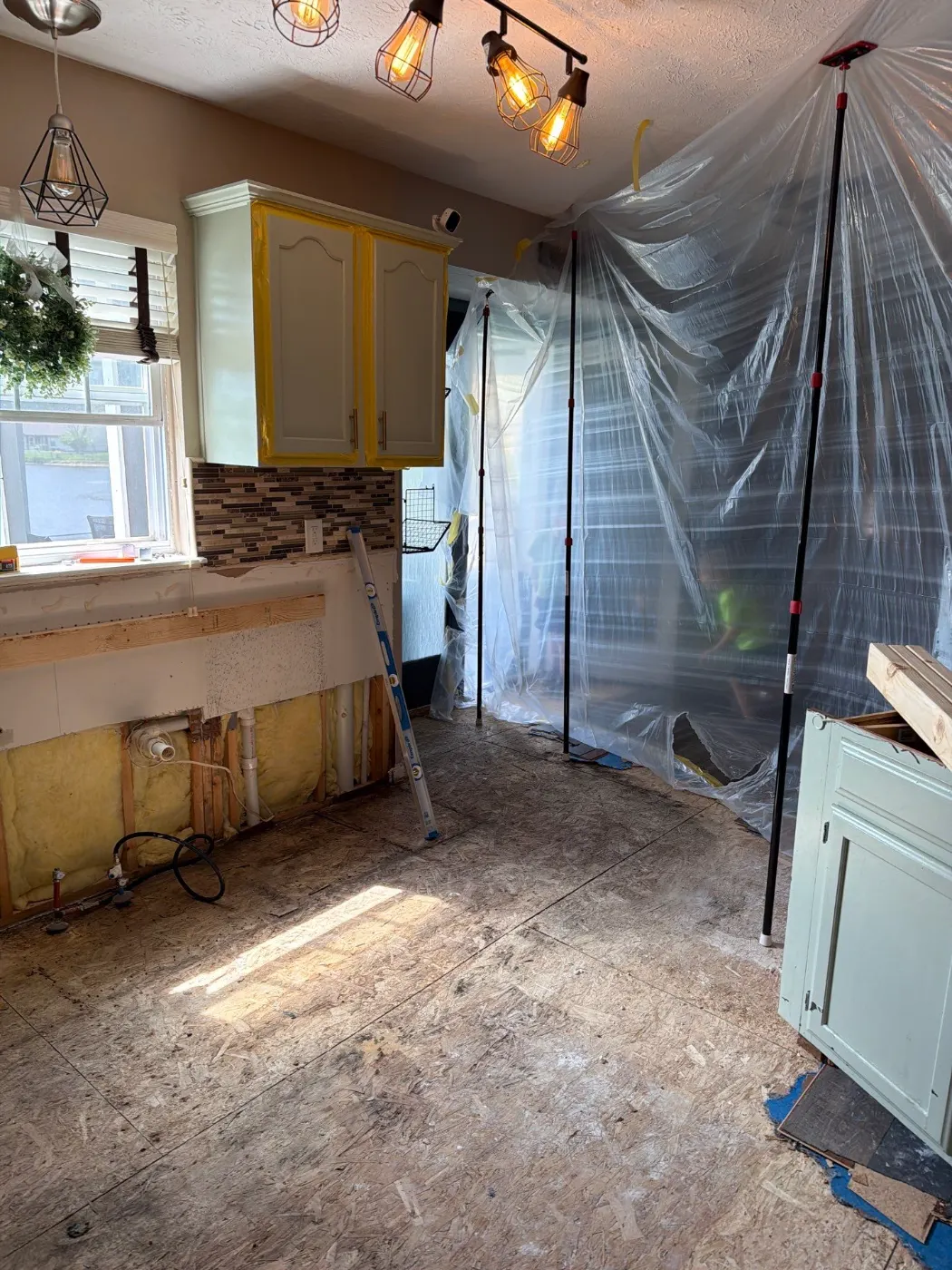
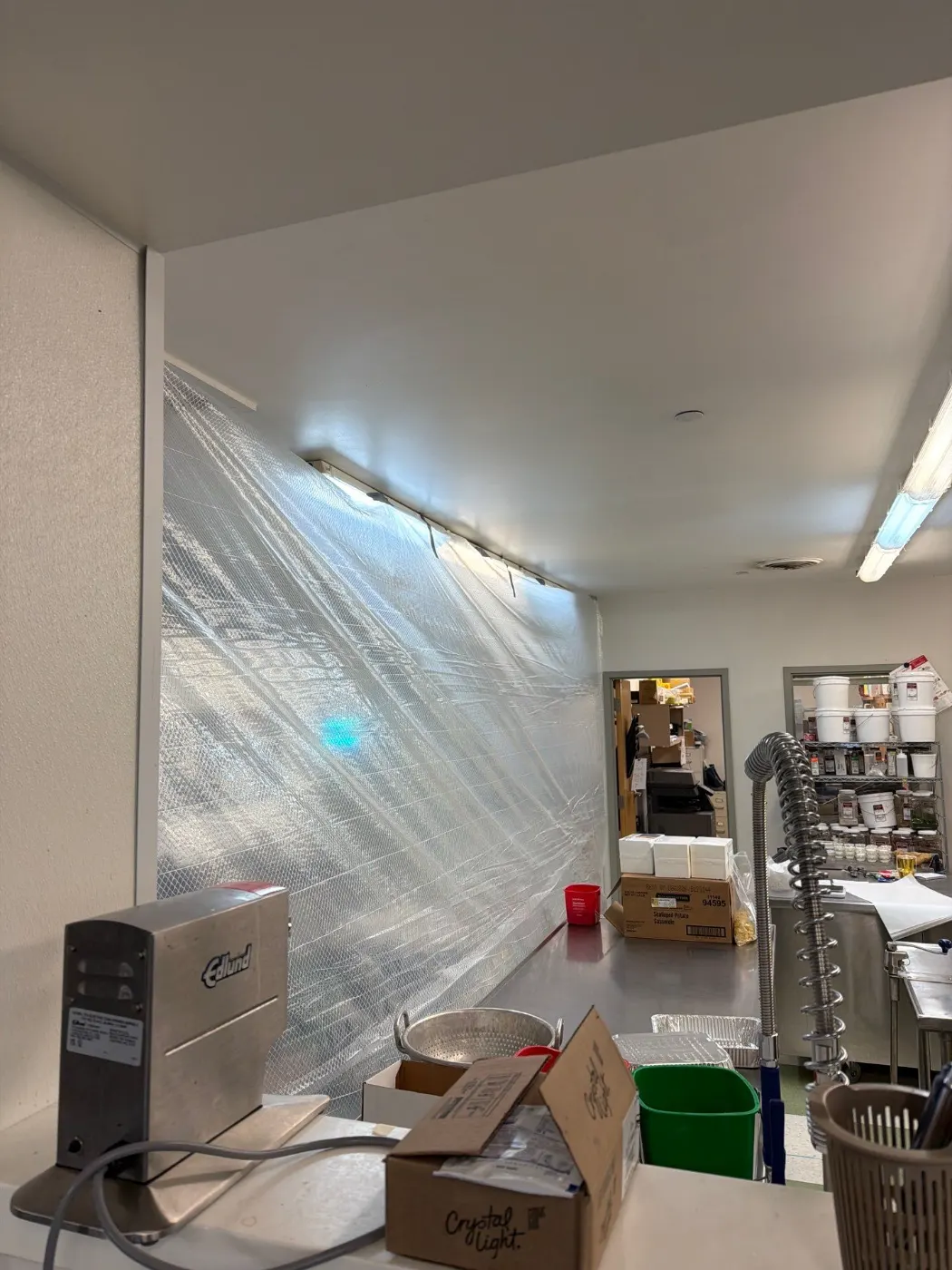
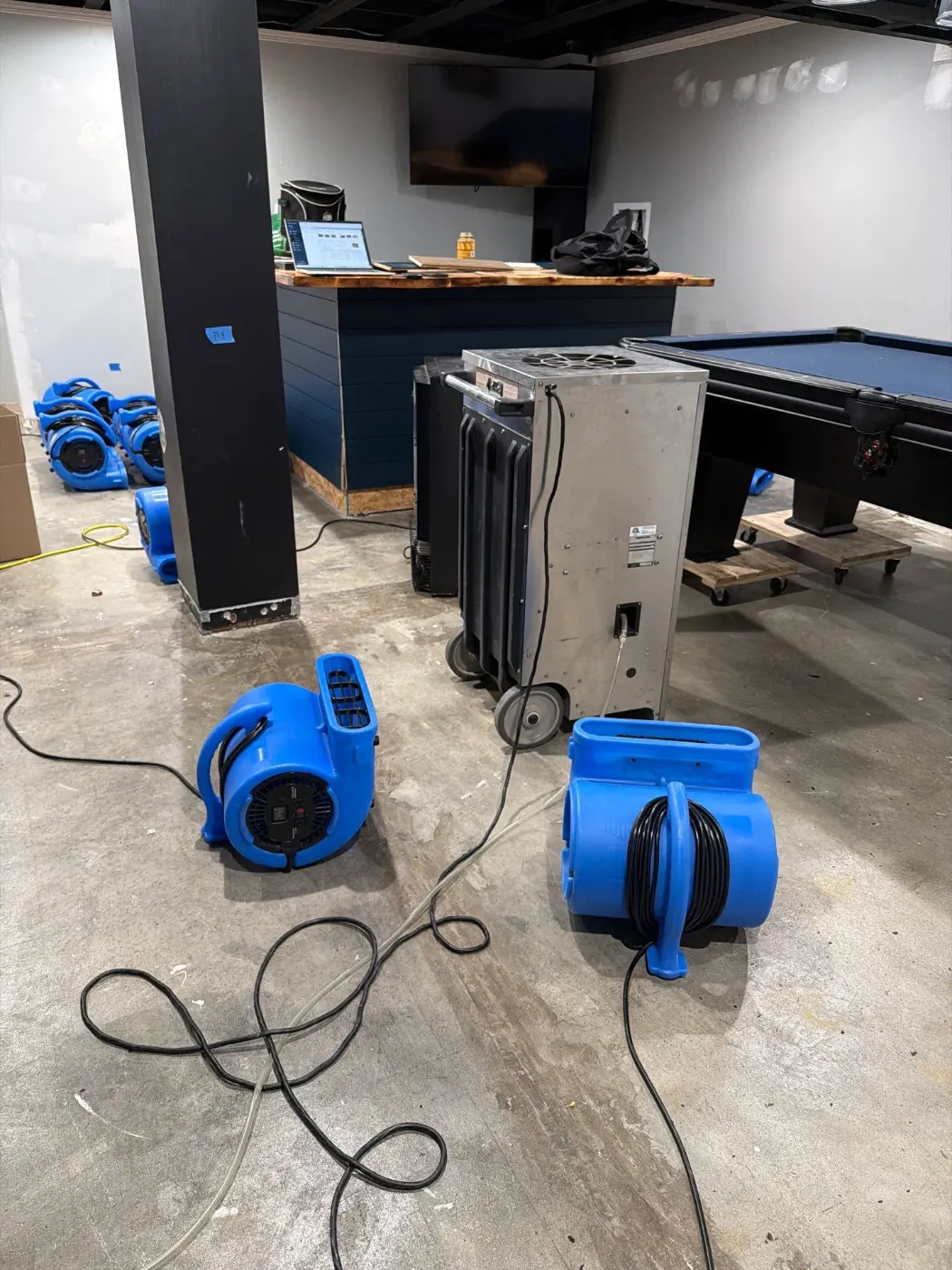
Once moisture mapping is complete, commercial water extraction begins across all affected zones simultaneously. For larger floor plates common to commercial properties along the Michigan Road Corridor, we deploy multiple units to reduce standing water as quickly as possible. After bulk extraction, commercial dehumidifiers and professional air movers are placed according to the structural drying calculations developed during inspection. For Category 2 or Category 3 losses involving gray water or black water contamination, containment barriers and HEPA filtration are introduced to prevent cross contamination into unaffected areas. Controlled demolition of saturated materials, including baseboards, lower wall sections, or subfloor panels, is performed when moisture readings confirm those materials cannot dry in place within acceptable time frames. Most Category 1 commercial losses reach drying completion in 3 - 5 days.

Navigating insurance documentation after a commercial flood is one of the most stressful parts of the process for property managers and facility directors in Spring Hill. Our Team works with your insurance carrier from the moment we arrive, providing the moisture mapping data, photographic documentation, equipment logs, and material assessments that adjusters need to evaluate the claim accurately. We coordinate with your adjuster directly so that the scope of work is clearly communicated and there are no gaps between what was damaged and what gets covered. Most major insurance carriers expect prompt mitigation, and the documentation our licensed crew produces meets that standard. We do not leave you to translate technical findings to a claims office on your own. Spring Hill commercial clients consistently tell us that having organized documentation from day one reduces their claim timelines considerably.

If you are reading this during an active flood event at your Spring Hill commercial property right now, stop waiting to see if the water recedes on its own. Call our team immediately. We offer free inspections with no obligation, and we dispatch within 2 hours to properties throughout Spring Hill and Marion County. The longer extraction is delayed, the more Category 1 clean water losses escalate toward Category 2 contamination as water contacts building materials and mechanical systems. Our licensed crew is equipped to begin work the moment we arrive. Call now and have a trained technician on site before the damage spreads to spaces you cannot afford to lose.

When to Call

Signs You Need Commercial Flood Damage Cleanup

If you notice any of these in your Spring Hill home, schedule a free inspection before the issue worsens.

Standing water visible on the floor of your Spring Hill commercial building's lobby, warehouse, or mechanical room after a storm event.

Storm drain or floor drain backing up and releasing gray water or sewage onto the floor of a retail or office suite.

Wet carpet or saturated flooring padding throughout multiple rooms or tenant spaces following a pipe failure.

Visible water staining or bubbling paint along the base of interior walls with no obvious surface source.

Musty or sewage odor developing inside your Spring Hill building within 24 hours of a known water intrusion event.

Ceiling tiles sagging, discolored, or actively dripping after a rooftop drain becomes blocked during heavy Indiana rainfall.

Tenant complaints about damp walls or wet electrical outlets following a plumbing failure on an upper floor.

Moisture readings above acceptable levels discovered during a routine facility inspection near Knoll Condominiums or Cold Spring Road properties.

HVAC equipment room flooding due to condensate line overflow or chiller leak affecting adjacent structural materials.

Spring Hill building owner receiving notice from an adjuster that prompt mitigation documentation is required to process a pending commercial water loss claim.

Our Process

How Spring Hill Water Restoration Handles Commercial Flood Damage Cleanup

Every job follows the same three-step process. Transparent, thorough, and done right the first time.

1

Dispatch and Site Arrival

Within 2 hours of your call, a licensed crew departs for your Spring Hill commercial property with extraction and inspection equipment loaded. You receive a direct call from the lead technician confirming arrival time so your facility staff can coordinate access. No delays waiting for equipment to be sourced or crew to be contacted.

2

Moisture Mapping and Category Assessment

Our team performs a full moisture mapping inspection using thermal imaging and calibrated moisture meters across all affected and adjacent spaces. Water category is determined at this stage. Category 1 clean water losses, Category 2 gray water events, and Category 3 black water contamination each require a different response protocol under IICRC S500 Water Damage Restoration standards, and this assessment drives every decision that follows.

3

Water Extraction and Containment

Commercial water extraction equipment removes standing water from affected floor areas as rapidly as possible. For contaminated losses, containment barriers are established and HEPA filtration is introduced before extraction begins. Controlled demolition of materials that cannot be dried in place, such as saturated drywall sections or compromised subfloor panels, is performed based on moisture meter readings, not assumptions.

4

Structural Drying Execution

Commercial dehumidifiers and professional air movers are positioned throughout the drying zone according to structural drying calculations developed during the inspection phase. Equipment placement is adjusted daily based on moisture meter readings at tracked locations. Most Category 1 commercial losses in Spring Hill reach target moisture levels in 3 - 5 days. Category 2 and Category 3 losses typically require 5 - 10 days depending on material depth and contamination scope.

5

Post Drying Verification and Documentation

Before equipment is removed, our licensed crew performs post drying verification using moisture meters at all previously tracked locations. Readings must reach established dry standards for each material type before the drying phase is closed. Final documentation is compiled and provided to your insurance adjuster. If reconstruction is needed, our team coordinates that scope as part of the same project.

Real Project Photos

Commercial Flood Damage Cleanup in Spring Hill

Photographs from real commercial flood damage cleanup jobs completed by our crew in Spring Hill and surrounding areas.
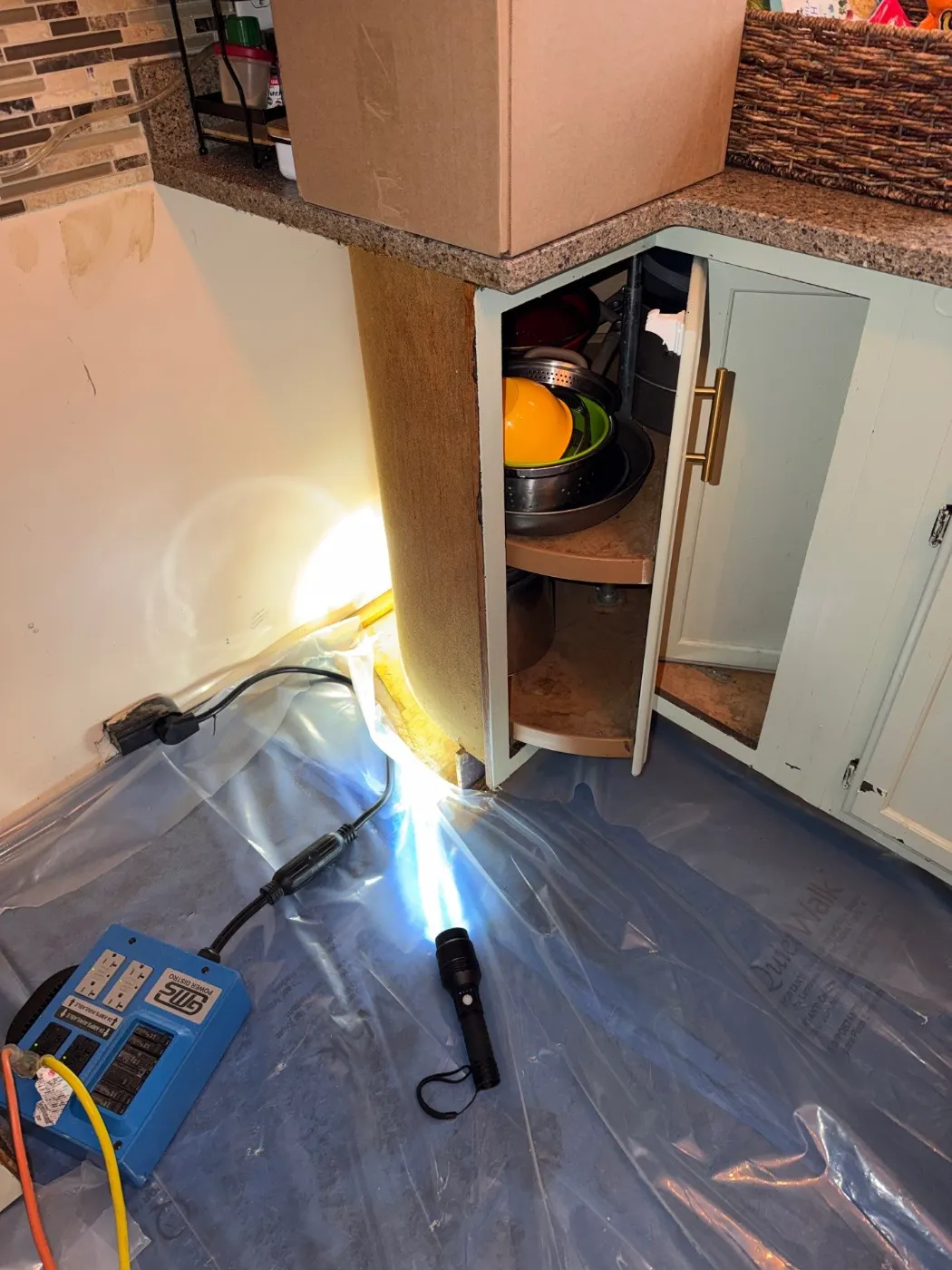
Water restoration project completed in Spring HillIICRC-certified dry-out in progress at Spring Hill homeResidential restoration project in Spring Hill, Hamilton County IndianaCertified restoration crew at work on Spring Hill residence
Common Questions

Commercial Flood Damage Cleanup FAQ

Questions we hear most often from Spring Hill homeowners considering commercial flood damage cleanup.

Within 2 hours of your call, a licensed crew dispatches to your Spring Hill commercial property with equipment loaded and ready to begin work on arrival. We maintain response coverage across all of Spring Hill and Marion County, including properties along the Michigan Road Corridor and the Cold Spring Road Estate area. There is no secondary dispatch process or waiting for a third party to become available. When you call, you reach our team directly, and arrival timing is confirmed before we hang up. Commercial flood losses do not pause, and our dispatch protocol is built around that reality.
Commercial flood cleanup costs in Spring Hill vary based on water category, affected square footage, and material types involved. Category 1 clean water losses in commercial settings typically range from $3,000 - $10,000 for moderately sized spaces. Category 2 gray water losses generally fall between $6,000 - $16,000 depending on contamination spread and required demolition. Category 3 black water events involving sewage or highly contaminated flood water commonly range from $14,000 - $50,000 or more for larger commercial floor plates. These are working ranges, not fixed bids. Every loss is scoped individually after inspection, and we provide detailed documentation that your insurance carrier can evaluate against the actual conditions found on site.
Most major insurance carriers cover sudden and accidental water damage events such as burst pipes, appliance failures, and storm drain backups when prompt mitigation steps are taken. Gradual leaks that were visible or known before the loss event are typically excluded from coverage. We work with your insurance carrier to provide the documentation adjusters require, including moisture mapping data, photographic evidence, and a detailed scope of affected materials. We coordinate with your adjuster throughout the process so nothing falls through the gaps. Your deductible will apply to the loss, and the covered portion depends on your specific policy terms. We do not make coverage determinations, but we give your carrier everything they need to make an accurate one.
Yes, our licensed crew holds certification under the IICRC S500 Water Damage Restoration standard, which is the industry benchmark for how water damage losses are assessed, categorized, and dried. IICRC S500 Water Damage Restoration certification means our technicians are trained in moisture physics, material classification, water category protocols, and structural drying calculations rather than working from general construction experience alone. In practice, that means the drying plan we build for your Spring Hill commercial property is based on measured data and published science, not guesswork. It also means the documentation we produce meets the standard that most major insurance carriers expect to see when evaluating a commercial water loss claim.
Drying timelines for commercial flood cleanup in Spring Hill depend on water category, the depth of moisture penetration into structural materials, and the size of the affected area. Category 1 clean water losses in commercial spaces typically reach drying completion in 3 - 5 days when extraction begins promptly. Category 2 gray water losses usually require 5 - 7 days because contaminated materials require more careful handling and some demolition is common. Category 3 black water events often extend to 7 - 14 days given the scope of required demolition and decontamination. Moisture meter readings taken daily at tracked locations determine when drying is actually complete, not a preset schedule.
Our Team handles all three water damage categories defined under IICRC S500 Water Damage Restoration standards. Category 1 involves clean water from a supply line break, failed appliance connection, or clean rain intrusion with no contamination present. Category 2, sometimes called gray water, involves water that carries microbiological or chemical contamination, such as overflow from a sink drain, dishwasher discharge, or washing machine failure. Category 3, or black water, involves highly contaminated water from sewage backups, rising floodwaters, or stagnant water that has been sitting long enough to support dangerous microbial growth. Each category requires a different extraction approach, containment protocol, and material handling decision, all of which are determined during our initial inspection.
Mold colonization can begin within 24 - 48 hours of a water intrusion event when moisture, temperature, and organic material are present together, which describes almost every commercial building interior in Spring Hill. The priority during the first hours after flooding is extraction and drying that removes the conditions mold needs before spore germination advances. Our licensed crew addresses moisture at the structural level, not just at the surface, because mold growth behind walls or under flooring is not visible until it is already a major problem. If a property has been wet for longer than 48 hours before we arrive, we inspect specifically for early mold presence and adjust our protocol accordingly, including HEPA filtration where needed to protect air quality.
First, if there is any risk of electrical contact with standing water, shut off power to affected circuits at the breaker panel and do not allow staff or tenants into the flooded area until it is confirmed safe. Second, document everything you can safely photograph from a dry position, including the source of water, the extent of standing water, and any visible damage to contents or building materials, as this documentation supports your insurance claim. Third, contact your insurance carrier to report the loss and note the time you reported it, since most major insurance carriers require timely notification. Fourth, do not attempt to use standard wet vacuums or portable fans as a substitute for commercial extraction equipment, since that approach rarely reaches moisture inside structural cavities and can give a false sense that drying is progressing.
Our licensed crew arrives with commercial water extraction equipment capable of removing large volumes of standing water from commercial floor areas quickly, which is the most critical first step in stopping the damage from spreading. We also carry commercial dehumidifiers that remove moisture from the air throughout the drying zone and professional air movers that accelerate evaporation from structural surfaces. Thermal imaging cameras allow us to see moisture migration inside wall cavities and under flooring without destructive investigation in every location. Calibrated moisture meters verify readings at specific depths in wood, concrete, and drywall throughout the drying process. Together these tools allow our team to build a drying plan based on measured conditions rather than visible surface observations alone.
Our Team handles both the mitigation phase and the reconstruction phase for Spring Hill commercial properties, and we coordinate both under a single project scope. Mitigation covers everything from water extraction and structural drying through controlled demolition of materials that cannot be salvaged. Reconstruction covers the rebuild of those same areas, including framing, drywall, flooring, and finish work, once the structure has been verified dry. Having a single team manage both phases means your building timeline is not stalled waiting for a separate contractor to pick up where mitigation ended. It also means reconstruction decisions made during demolition are communicated directly to the rebuild crew rather than handed off in a written scope that may miss field conditions.
Send a Message

Request Commercial Flood Damage Cleanup

Contact Information

Reach Us Directly

Our team is available 24/7 for emergencies and ready to schedule inspections during business hours.

Hours
Available 24/7
Service Area
Spring Hill, IN and Surrounding Areas
License
RC21100059

Need Immediate Help?

For active water, fire, or mold emergencies, call us directly. We are available 24/7.

Call NowGet Quote