Commercial Mold Remediation

Commercial Mold Remediation in Spring Hill, IN

Trusted Commercial Mold Remediation for Spring Hill Businesses and Property Managers in Marion County

Call (317) 676-4257Get Free Quote
Quick Answer

Spring Hill Water Restoration provides commercial mold remediation in Spring Hill, IN. IICRC certified crews, scheduled assessment, written scope before work begins. We work with your insurance carrier on approved claims. Call (317) 676-4257 to schedule.

  • Service: Commercial Mold Remediation for Spring Hill homeowners
  • Service area: Spring Hill, IN and surrounding areas
  • Response time: Scheduled inspection, typically next business day or sooner
  • Licensed and insured (License #RC21100059)
  • Serving Spring Hill, IN since 2018
Commercial Mold Remediation Services

Expert Commercial Mold Remediation for Spring Hill Homeowners

Commercial properties in Spring Hill deal with mold conditions that most building owners do not fully anticipate when they first notice a musty odor or a stained ceiling tile. Mold is a biological process that accelerates inside wall cavities, under flooring, and behind insulation wherever moisture lingers longer than 24 - 48 hours. For facility directors managing multi tenant buildings along the Michigan Road Corridor or property managers overseeing the Knoll Condominiums, the consequences of delayed action extend beyond cosmetic damage. Mold degrades drywall, wood framing, and HVAC insulation, and it creates indoor air quality concerns that can affect tenant health, trigger lease disputes, and invite regulatory scrutiny from Marion County code enforcement.

Our Team schedules a free mold assessment for Spring Hill commercial properties typically the next business day or sooner, depending on whether an active water intrusion event is still ongoing. When you call to book, our crew coordinator will ask about the approximate affected area, the likely moisture source, and how long the condition has been present. This context shapes what tools we bring to the initial visit. For most commercial assessments, that includes moisture meters to probe wall assemblies and flooring substrates without destructive testing, as well as HEPA filtration equipment staged to protect occupied areas of the building while the inspection is underway. We do not guess at scope on the phone.

The formal inspection follows IICRC S520 (Mold Remediation) methodology, which means we approach every Spring Hill commercial property with a structured moisture mapping process rather than a visual walkthrough alone. Our licensed crew uses thermal imaging cameras to locate temperature differentials in walls and ceilings that indicate trapped moisture invisible from the surface. Moisture meter readings are taken at grid intervals across the suspected zone, and those readings are recorded to establish a clear boundary between affected and unaffected materials. This documentation matters because it gives your insurance adjuster and any Marion County code inspector a factual baseline rather than an opinion, and it protects you if questions arise later about the original scope of the problem.

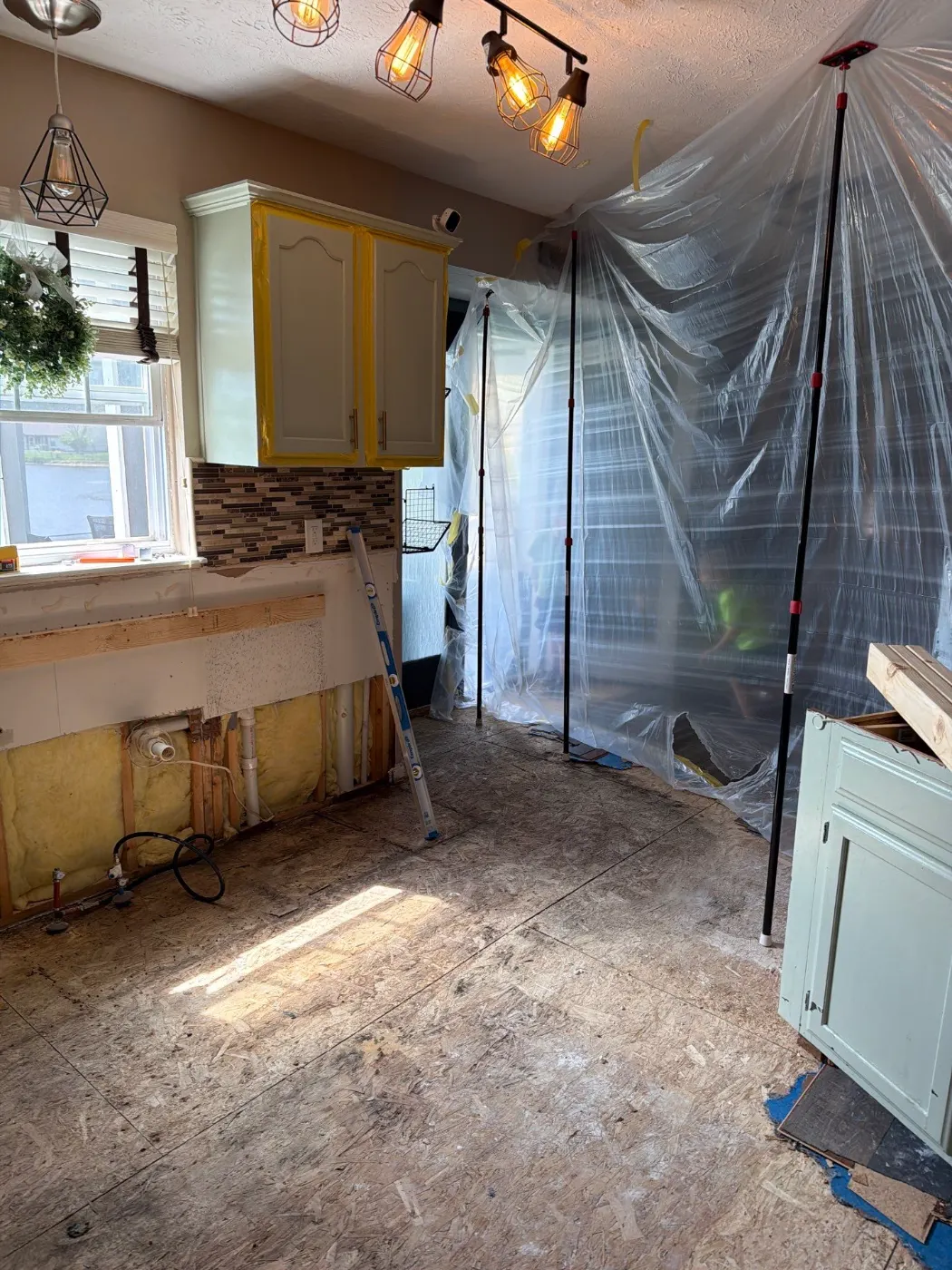
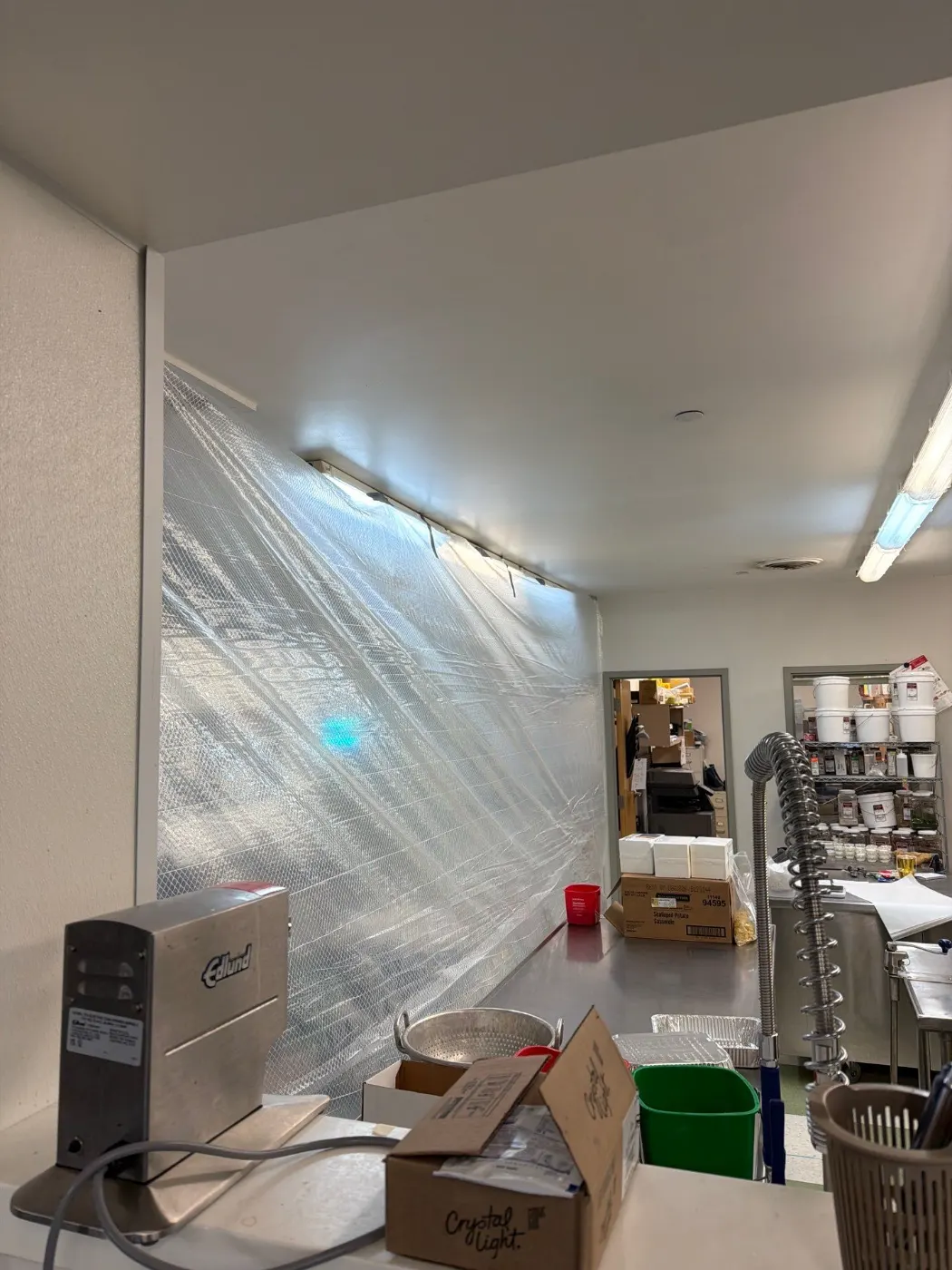
Once scope is confirmed, our licensed crew establishes physical containment around the affected zone using polyethylene barriers and negative air pressure to prevent mold spores from migrating into clean areas of your building. Controlled demolition removes only the materials confirmed as unsalvageable, which in a commercial setting often means sections of drywall, insulation batts, or subfloor panels rather than entire rooms. Antimicrobial treatments are applied to the structural surfaces that remain, and HEPA filtration runs continuously during the removal phase to capture airborne particulates. Timing for the full remediation scope varies depending on square footage, material types involved, and whether HVAC systems require attention. Smaller contained jobs and larger multi area projects have meaningfully different schedules, and we give you a realistic timeline at assessment.

Most major insurance carriers recognize commercial mold remediation as a covered loss when the mold resulted from a sudden and accidental water event rather than long term maintenance neglect. Our team works with your insurance carrier and coordinates directly with your adjuster to provide the documentation they need, including the moisture mapping findings, photographic evidence, and a written scope of work aligned with IICRC S520 (Mold Remediation) standards. Spring Hill business owners who have been through a water loss often tell us the adjuster coordination piece is the most confusing part of the process. We do not works with your insurance carrier, but we make sure the paperwork moving between our office and your adjuster is accurate and timely so your claim moves forward without unnecessary delays.

If you have noticed signs of mold growth, persistent moisture odors, or unexplained air quality complaints in your Spring Hill commercial property, the right move is to schedule a professional assessment before the affected area expands further. Mold problems grow in proportion to the moisture that feeds them, and a condition that affects one wall cavity this week can involve an entire floor assembly within a few weeks if the moisture source is not resolved. Our Team offers a free mold inspection with no obligation. Contact us today to get on the schedule, and our crew will arrive prepared to give you an honest, documented picture of what your building actually needs.

When to Call

Signs You Need Commercial Mold Remediation

If you notice any of these in your Spring Hill home, schedule a free inspection before the issue worsens.

Visible dark staining on ceiling tiles or drywall in common areas of a Spring Hill office building.

Musty or earthy odors that become stronger when the HVAC system cycles on.

Tenant or employee complaints about respiratory irritation, headaches, or allergy like symptoms inside the building.

Water stains on walls or flooring in the Knoll Condominiums common corridors following a plumbing supply line failure.

Peeling or bubbling paint on interior walls indicating moisture trapped behind the surface.

Warped or buckled vinyl or laminate flooring in restrooms, break rooms, or server rooms.

Condensation forming regularly on interior glass, metal framing, or enclosed wall spaces surfaces.

Known roof leak or window seal failure that went unaddressed for more than two to three weeks.

wall and cavity inspection report flagging microbial growth on cooling coils or in air handling units serving Spring Hill commercial tenants.

Cold Spring Road Estate Properties commercial suite with a history of basement seepage after Indiana's heavy spring rain events.

Our Process

How Spring Hill Water Restoration Handles Commercial Mold Remediation

Every job follows the same three-step process. Transparent, thorough, and done right the first time.

1

Free Site Assessment

Our licensed crew visits your Spring Hill commercial property, typically the next business day after your call. We review the reported concern, inspect accessible areas, and use moisture meters to probe wall assemblies and flooring without invasive demolition. You receive a clear verbal summary of what we found before we leave the property, and a written scope follows shortly after.

2

Moisture Mapping and Documentation

Using thermal imaging cameras and calibrated moisture meters, our team maps the full boundary of the affected zone across your building. This process follows IICRC S520 (Mold Remediation) standards and produces a documented record of moisture readings at measured intervals. For Marion County commercial properties, this documentation is often essential for insurance coordination and code compliance purposes.

3

Containment and Air Control

Before any material is disturbed, our crew seals the work zone with polyethylene barriers and establishes negative air pressure using HEPA filtration equipment. This prevents mold spores from traveling into occupied portions of your Spring Hill building during the remediation work. Occupied businesses on adjacent floors or in neighboring suites are protected throughout this phase.

4

Removal and Treatment

Controlled demolition targets only the materials confirmed unsalvageable by our moisture mapping findings. Affected drywall, insulation, and flooring substrates are bagged and removed following containment protocols. Structural surfaces that remain are treated with antimicrobial agents approved for commercial use. HEPA filtration continues running throughout removal to capture airborne particulates generated during demolition.

5

Verification and Clearance

After remediation is complete, our team performs post drying verification using moisture meters to confirm that structural assemblies have returned to acceptable moisture levels. Readings are compared against the baseline established during moisture mapping. We do not close out a Spring Hill commercial project until the data confirms the affected materials are dry and the remediated surfaces are clear.

Real Project Photos

Commercial Mold Remediation in Spring Hill

Photographs from real commercial mold remediation jobs completed by our crew in Spring Hill and surrounding areas.
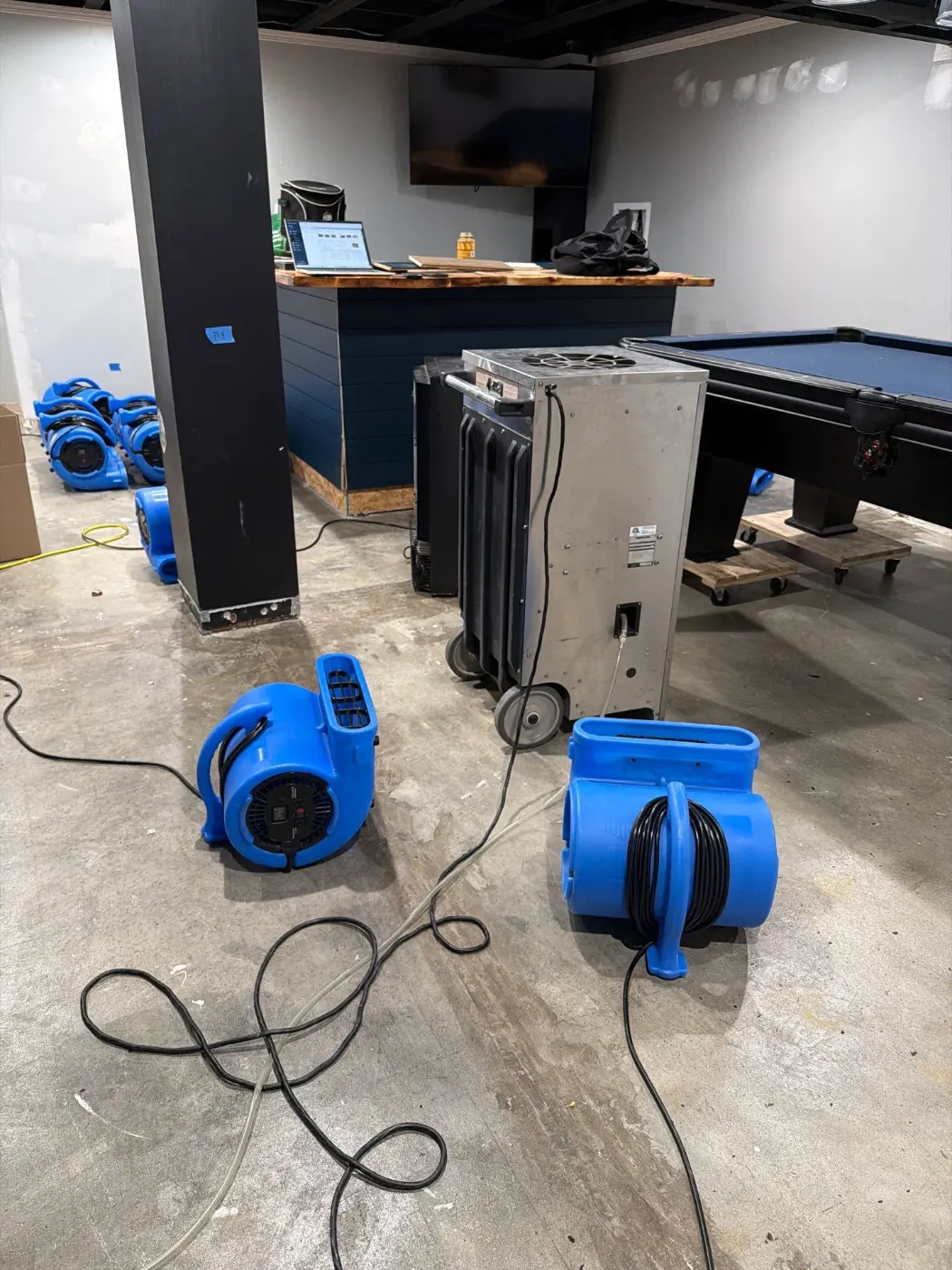
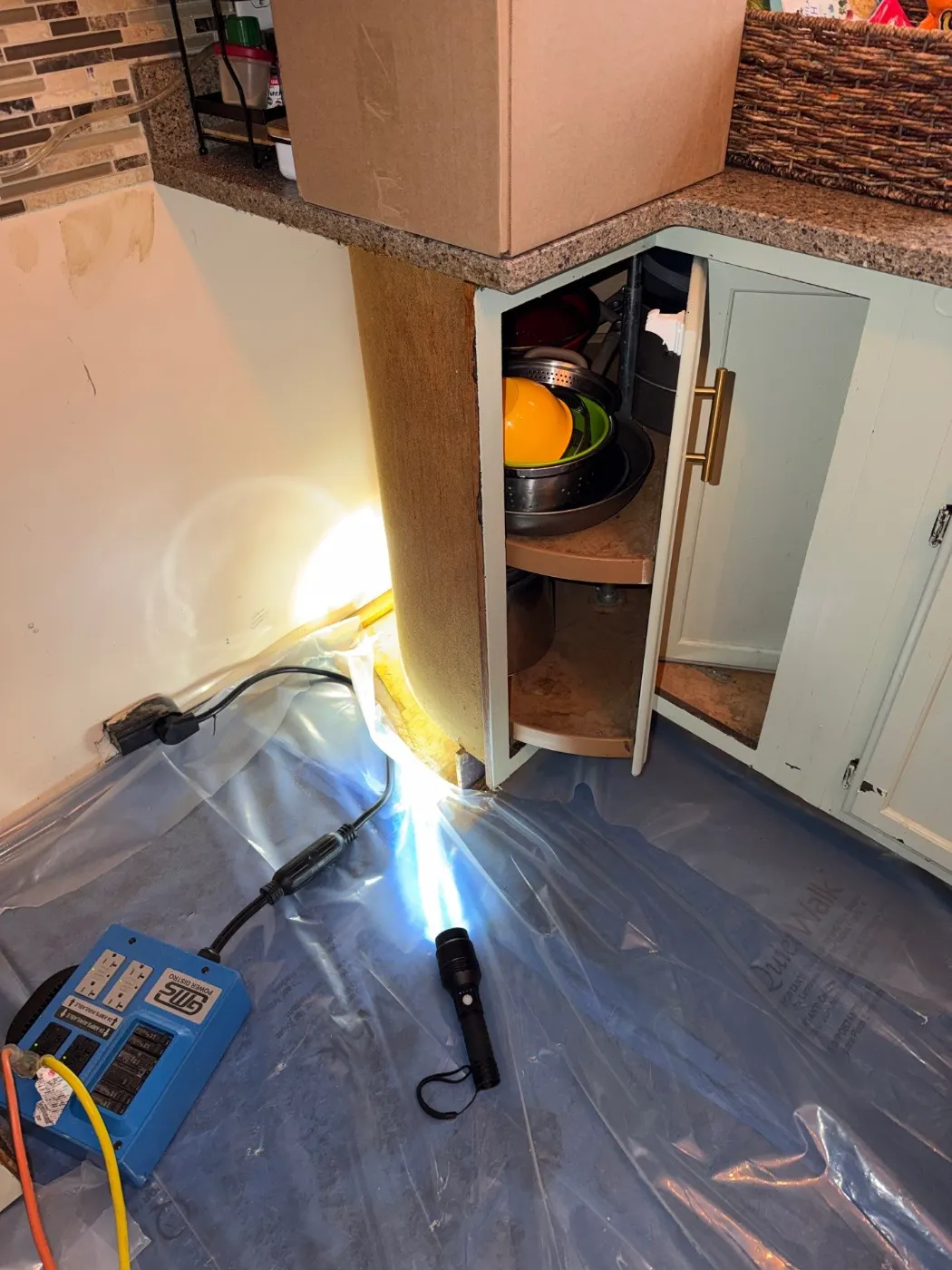
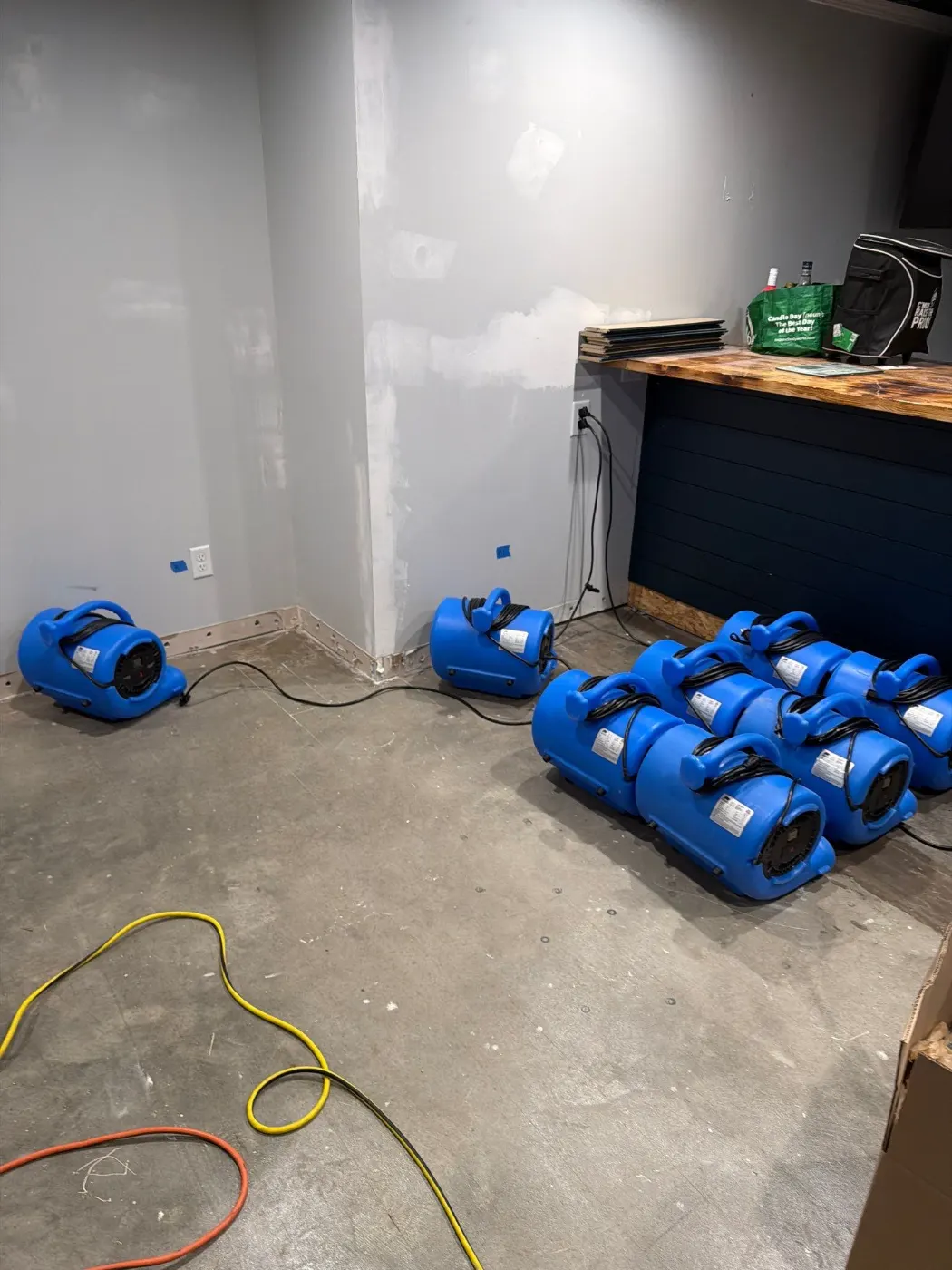
Water restoration project completed in Spring HillIICRC-certified dry-out in progress at Spring Hill homeResidential restoration project in Spring Hill, Hamilton County IndianaCertified restoration crew at work on Spring Hill residence
Common Questions

Commercial Mold Remediation FAQ

Questions we hear most often from Spring Hill homeowners considering commercial mold remediation.

Our Team schedules mold assessments for Spring Hill commercial properties typically the next business day after your initial call, and in some cases sooner depending on the volume of current projects and the nature of the water event that caused the mold condition. We do not operate this service as an scheduled dispatch line because mold remediation is a planned, methodical process that benefits from proper preparation rather than rushed response. When you call, our coordinator will gather basic information about the affected area, the suspected moisture source, and the approximate timeframe since the water event occurred. That information shapes what our crew brings to the assessment and ensures we arrive ready to give you a useful, documented evaluation. Schedule your free assessment by contacting us directly, and we will confirm your appointment time before we arrive.
Commercial mold remediation costs in Spring Hill vary significantly based on the size of the affected area, the materials involved, and the category of the original water source. For reference, residential Category 1 clean water mold jobs typically range from $1,500 - $4,500, Category 2 gray water situations from $3,000 - $8,000, and Category 3 black water events from $7,000 - $25,000 or higher. Commercial projects in Spring Hill generally run 2 - 5 times those residential benchmarks because of larger square footage, more complex HVAC involvement, and the need for containment systems that protect occupied tenant spaces. We provide a written scope and cost estimate after the free on site assessment so you are never working from a phone estimate alone. If your loss is covered by your insurance carrier, we coordinate with your adjuster to make sure the documented scope reflects the actual work required.
Coverage for commercial mold remediation in Spring Hill depends primarily on whether the mold resulted from a sudden and accidental water event, such as a burst pipe, roof storm damage, or an appliance failure, rather than from long term seepage or deferred maintenance. Most major insurance carriers include mold remediation as part of a covered water damage claim when the underlying cause meets that sudden and accidental standard. Gradual leaks that developed over months are more frequently denied, which is why documenting the timeline of the water event matters from the start. Our team coordinates with your adjuster and provides the moisture mapping documentation, photographic evidence, and IICRC S520 aligned scope of work that adjusters typically require to process a commercial claim. We do not works with your insurance carrier, but we work closely with your insurance carrier throughout the process to keep the claim moving. Keep in mind that your deductible applies regardless of coverage, and we can walk you through what to expect during the initial assessment.
Yes. Our licensed crew holds certification under IICRC S520 (Mold Remediation), which is the industry standard governing how mold inspections, containment, and removal work should be performed in commercial and residential settings. IICRC S520 (Mold Remediation) certification means our crew has been trained and tested on moisture science, proper containment protocols, antimicrobial application standards, and post remediation verification practices. In practical terms, this means the work we perform in your Spring Hill commercial building follows a documented methodology rather than a general contractor's best guess. For facility directors and property managers, IICRC certified remediation also carries weight with insurance adjusters and with any industrial hygienist who may be reviewing the project independently. When you hire our team, you are getting a crew whose training aligns with the same standards that most major insurance carriers and Marion County commercial property inspectors recognize as the benchmark for this work.
The duration of a commercial mold remediation project in Spring Hill depends on several factors that we can only assess accurately after the free site inspection. A small, contained mold condition affecting a single wall cavity in a Spring Hill office suite may be fully remediated within a few days once work begins. A larger scope involving multiple rooms, HVAC system components, or several floors of a multi tenant building along the Michigan Road Corridor will naturally take longer, sometimes one to two weeks or more. Material types also matter, since removing and treating concrete block, metal stud framing, or specialized commercial flooring systems takes more time than standard drywall. We give every Spring Hill commercial client a realistic project timeline during the scoping phase, and we do not compress schedules in ways that compromise the quality of containment or the accuracy of post drying verification readings.
Our team handles all three water damage categories that can lead to mold growth in Spring Hill commercial properties. Category 1 refers to clean water from a sanitary source, such as a supply line break or a rain intrusion through a roof, and it carries the lowest contamination risk. Category 2, often called gray water, includes discharge from dishwashers, washing machines, or HVAC condensate lines, and it introduces biological contaminants that require more aggressive treatment protocols. Category 3 is black water, which includes sewage backups, floodwater from outdoor sources, and any water that has been standing long enough to develop significant biological contamination. The mold remediation approach and the protective measures our crew uses differ across these categories, and misclassifying a Category 3 situation as a Category 1 is a mistake that creates real health and liability risks for Spring Hill building owners.
Mold spores are present in most indoor environments at low levels, but active mold colony growth requires sustained moisture contact with an organic material surface. The critical window is generally 24 - 48 hours after water reaches wall assemblies, flooring substrates, or ceiling materials. After that threshold, conditions inside wall cavities are typically favorable for mold growth even if the surface looks dry from the outside. This is why a burst pipe or a roof leak that gets cleaned up visually but not dried structurally so often leads to mold problems that surface weeks later. For Spring Hill commercial properties that have experienced any water intrusion event, scheduling a professional moisture assessment before that 24 - 48 hour mark is the most effective prevention step. If that window has already passed, a professional inspection and documented scope of remediation is still far less costly than letting the condition spread further.
Before our licensed crew arrives for the free mold assessment, there are a few straightforward steps that protect both the people in the building and the integrity of the documentation process. First, restrict access to the visibly affected area so that foot traffic does not disturb surface mold growth and spread spores to adjacent spaces. Second, photograph the visible damage with timestamps from a phone camera before any cleaning or disturbance occurs, since those photos support the insurance claim narrative. Third, locate and stop the moisture source if it is still active, such as shutting off a leaking supply line or tarping a damaged roof section, because active moisture prevents accurate assessment. Fourth, gather any available maintenance records or prior inspection reports related to the water event, since our crew and your adjuster may find that documentation useful when establishing the timeline of the loss.
For a commercial mold assessment and remediation project in Spring Hill, our team brings tools selected for accuracy and for protecting occupied building spaces. Moisture meters allow our crew to read the moisture content of wall assemblies, flooring substrates, and wood framing without opening walls unnecessarily during the inspection phase. Thermal imaging cameras let us see temperature patterns that reveal hidden moisture pockets behind finished surfaces, which is particularly useful in the larger floor plates common along the Michigan Road Corridor. HEPA filtration equipment runs throughout the remediation phase to capture airborne mold particulates and protect building occupants in adjacent spaces. Commercial dehumidifiers support structural drying of salvageable materials after contaminated materials have been removed. Each piece of equipment serves a specific function in the IICRC S520 (Mold Remediation) process, and we do not bring equipment to a project unless the documented scope calls for it.
Our team handles both the remediation and the rebuild, which matters significantly for Spring Hill commercial property managers who do not want to coordinate two separate contractors on a single mold loss. Once remediation and post drying verification are complete, our licensed crew can transition directly into replacing the drywall, insulation, flooring, or other materials that were removed during the controlled demolition phase. Working with one team from assessment through reconstruction means the rebuild scope is based on the same documented moisture mapping findings that guided the removal, so nothing gets rebuilt over materials that have not been fully cleared. It also means one project schedule, one point of contact for your insurance carrier coordination, and one crew that understands the full history of the building condition from the first day of assessment through the final inspection.
Send a Message

Request Commercial Mold Remediation

Contact Information

Reach Us Directly

Our team is available 24/7 for emergencies and ready to schedule inspections during business hours.

Hours
Available 24/7
Service Area
Spring Hill, IN and Surrounding Areas
License
RC21100059

Need Immediate Help?

For active water, fire, or mold emergencies, call us directly. We are available 24/7.

Call NowGet Quote