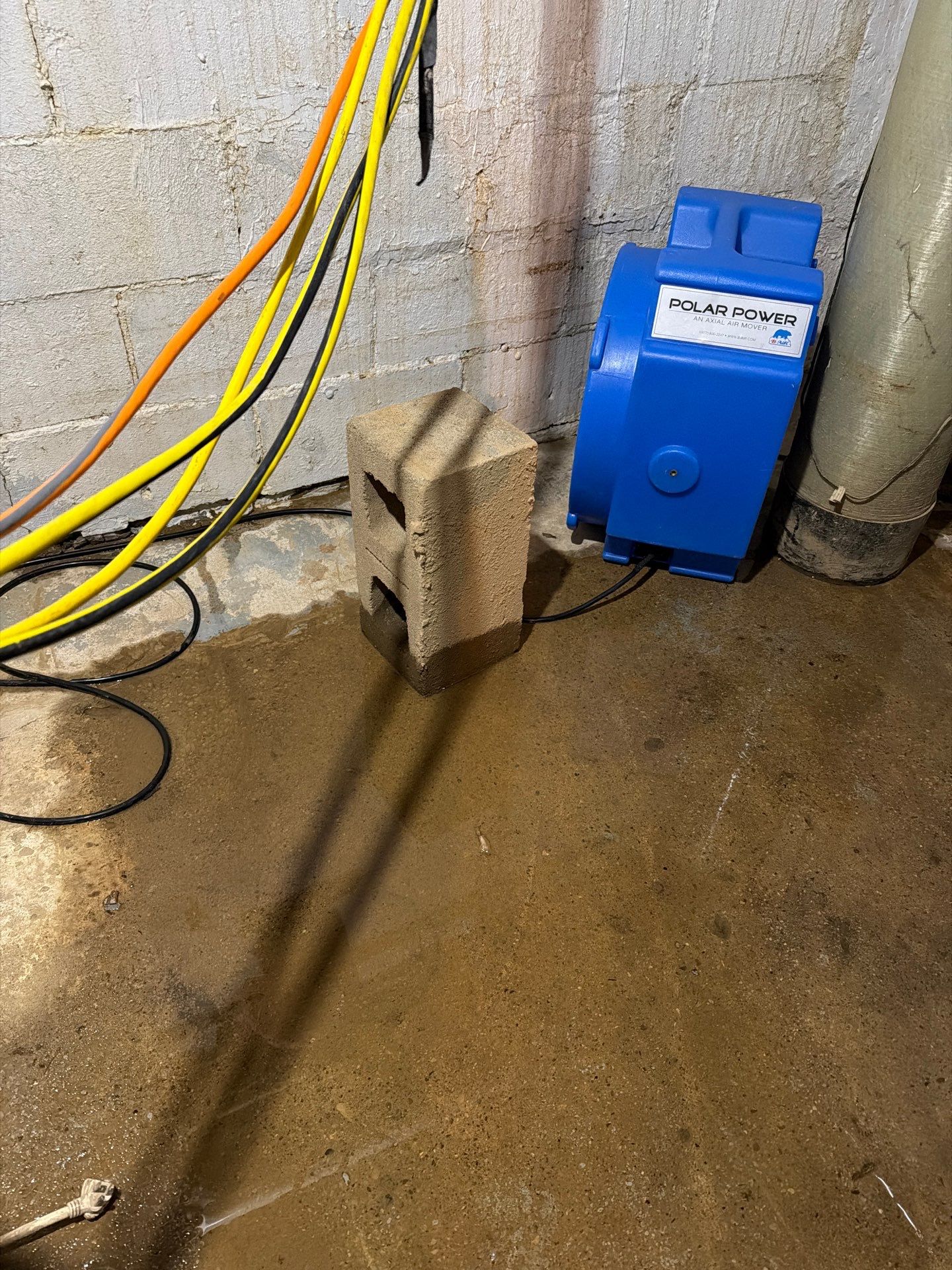
Early Warning Signs Your Subfloor Is Wet
Subfloor damage hides. Watch for these red flags before you ever pull up a board.
- Soft, spongy, or bouncy spots when you walk across the room
- Cupped, crowned, or buckling hardwood planks
- Tile grout cracking or individual tiles lifting
- Vinyl plank seams separating or edges curling
- A musty, earthy odor that gets stronger near the floor
- Dark staining on baseboards or where the floor meets the wall
- Squeaks and creaks that were not there last season
- Visible water stains on basement ceilings directly below the room
- Nail pops pushing up through carpet or laminate
- Doors that suddenly stick or drag on the floor in one corner
One sign on its own is not a verdict. Three or more together usually means the subfloor is compromised.
The 7 Step Detection and Repair Process
Here is exactly how our Spring Hill crews work a subfloor job from first knock to final invoice.
- Visual and moisture inspection. We map the wet area with pinless moisture meters, thermal imaging, and pin probes at suspect spots.
- Source identification. No drying happens until the leak is stopped. We coordinate with your plumber or shut off the source ourselves.
- IICRC category classification. Clean water (Cat 1), grey water (Cat 2), or black water (Cat 3) determines the entire scope.
- Containment and extraction. We isolate the room, extract standing water, and remove finished flooring over the saturated zone.
- Structural drying. Air movers and LGR dehumidifiers run 3 to 5 days with daily moisture readings logged for your insurance file.
- Subfloor repair or replacement. Wet plywood that has lost integrity gets cut out and replaced. Salvageable sections are dried in place.
- Reinstallation and documentation. Flooring goes back down, and you get a full moisture log, photos, and scope for your claim.
Real Repair Cost Ranges in Spring Hill
Every job is different, but these are honest ranges for central Indiana homes in 2024 and 2025.
- Inspection and moisture mapping: $0 to $300, often waived if you hire the same company for restoration
- Emergency water extraction: $400 to $1,500 depending on volume
- Structural drying (3 to 5 days): $1,200 to $3,500
- Subfloor replacement (plywood/OSB): $40 to $85 per square foot installed, including demo
- Joist sistering or repair if framing is damaged: $100 to $300 per linear foot
- Antimicrobial treatment: $300 to $700
- Hardwood, tile, or LVP reinstall: varies by material, $6 to $18 per square foot
- Full small bathroom subfloor project: typically $2,500 to $6,500 turnkey
- Kitchen or larger living area: $5,000 to $15,000+ depending on scope and finish level
Most homeowners insurance covers sudden and accidental water damage, including subfloor replacement, when documented properly. Our reports are written in claim language adjusters expect. If you want the full pricing picture across services, our water damage restoration cost breakdown covers it in detail.
IICRC Water Categories and What They Mean for Your Subfloor
Category matters because it dictates whether your subfloor can be dried in place or must be removed.
- Category 1 (clean water): Supply line, refrigerator line, sink overflow. Subfloor often dries in place if caught within 48 hours.
- Category 2 (grey water): Dishwasher discharge, washing machine overflow, shower drain backups. Saturated plywood typically gets cut and replaced.
- Category 3 (black water): Sewage, toilet overflows past the trap, groundwater flooding. Subfloor and any porous material removed without exception.
Time also reclassifies water. A Cat 1 leak left for 72 hours can degrade to Cat 2 as bacteria multiply. That is why fast response saves both material and money.
For a deeper look at the dirtiest scenarios, see our breakdown of toilet overflow and Category 3 water removal.
What You Can Do Before We Arrive
Quick moves that protect your home and your claim:
- Shut off the water source if you can do it safely
- Move furniture and rugs off the wet area
- Place foil or plastic squares under furniture legs touching damp flooring
- Take dated photos and short videos of every affected room
- Do not run box fans on Category 2 or 3 water, you will spread contamination
- Save receipts for any emergency purchases, they are often reimbursable
- Call your insurance carrier to open a claim number
- Write down when you first noticed the issue, adjusters always ask
Why Spring Hill Homeowners Call Spring Hill Water Restoration
- IICRC certified technicians on every job
- BBB A+ rated, founded 2018, locally owned
- 24/7 emergency dispatch across central Indiana
- Direct insurance billing and documentation built for adjusters
- Honest scope reviews, including telling you when you do not need us
- One crew from extraction through final flooring, no handoffs between subs
Materials We Use for Subfloor Replacement
Not all sheathing is equal, and matching the original spec keeps your floor flat and quiet for the long haul.
- 3/4 inch tongue and groove plywood: the standard for most Spring Hill residential floors
- Advantech or similar engineered panels: better moisture resistance, used in bathrooms and kitchens
- 3/4 inch OSB: common in newer builds, replaced like for like to preserve floor height
- Cement backer board: added under tile reinstalls for stability
- Construction adhesive plus ring shank nails or screws: stops future squeaks at the joist line
What Causes Subfloor Damage in Spring Hill Homes
The sources we see most often on service calls in central Indiana:
- Slow supply line leaks behind dishwashers, fridges, and washing machines
- Failed wax rings under toilets, especially on second floors
- Shower pan and tub surround leaks that drain into the joist bay
- Burst or pinhole copper lines after a hard freeze
- Sump pump failures soaking basement subflooring
- HVAC condensate pan overflows on upper floor air handlers
- Ice dams and roof leaks tracking down into floor systems
- Window flashing failures during sideways spring rain
- Aquarium and humidifier spills that go unnoticed for weeks
If your damage came from a storm event, our storm damage response team handles roof, exterior, and interior water intrusion as a single project so nothing falls between trades.
How Long the Whole Project Takes
Timelines clients ask about most:
- Day 1: inspection, extraction, demo of wet flooring
- Days 2 to 4: structural drying with daily monitoring
- Day 5: subfloor cut out and replacement, framing repairs if needed
- Days 6 to 10: finish flooring reinstall, trim, and punch list
- Insurance claim review and final documentation: 1 to 2 weeks after completion
Save vs Replace: How We Make the Call
Not every wet subfloor needs a tear out. Here is the decision framework we use on every Spring Hill job.
- Moisture content under 16% after drying: usually salvageable
- Visible delamination of plywood layers: replace
- Soft, crumbly, or fibrous OSB: replace
- Mold growth on the underside: remove, treat joists, replace
- Cat 1 water caught inside 24 to 48 hours: often dries in place
- Cat 2 or Cat 3 contact: remove regardless of how it looks
- Structural sag or joist rot: framing repair before new sheathing
- Tongue and groove edges crumbling under a screwdriver tip: replace that section