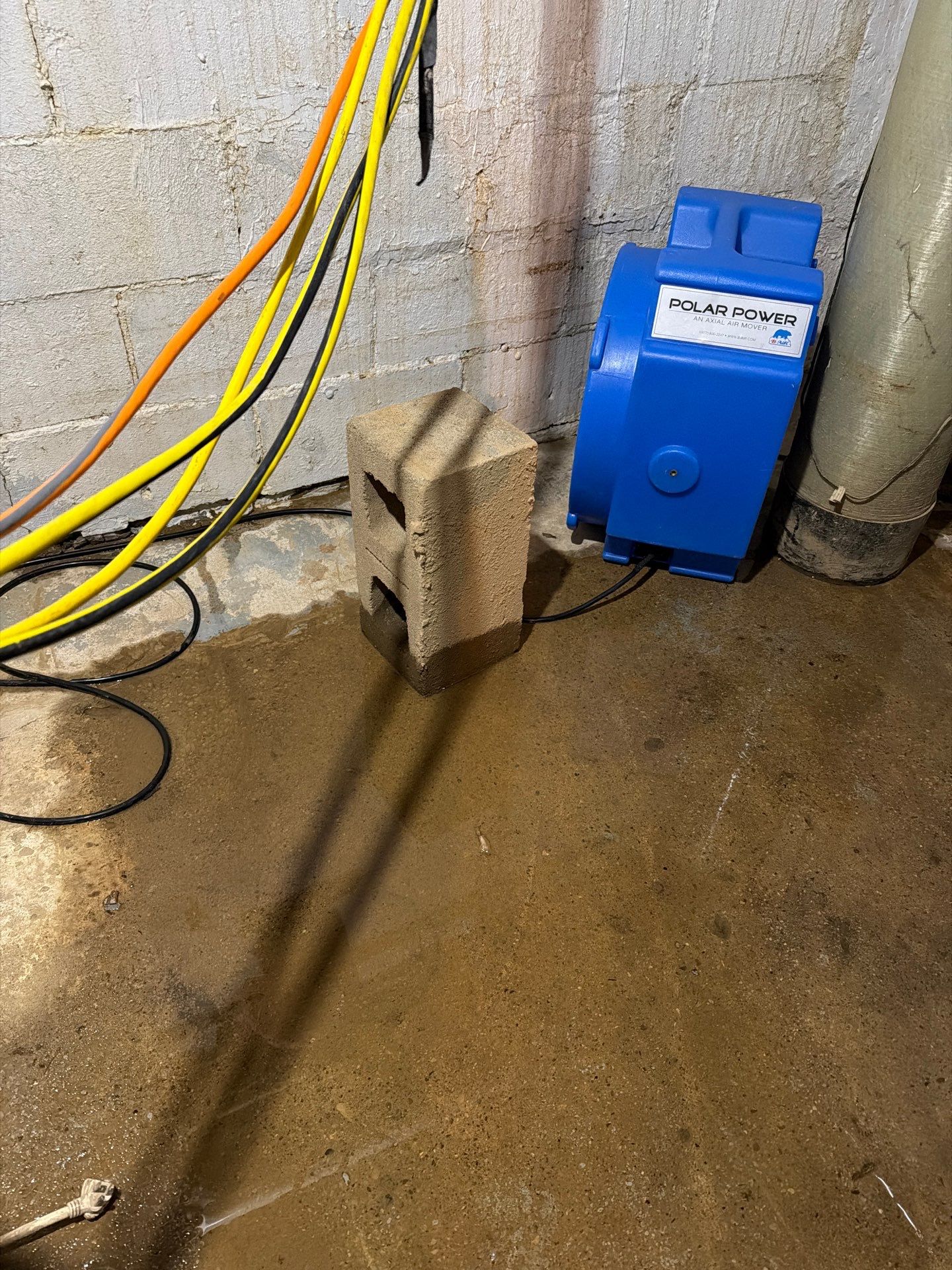
What exactly is Category 1 water damage?
Category 1 is water that comes from a sanitary source and poses no immediate health risk if you touch it or breathe near it. Think of a supply line break under your kitchen sink, an overflowing bathtub with clean water, a melting ice maker line, or a busted washing machine hose before it has run through any dirty laundry. In Spring Hill homes, the most common Category 1 sources we see are burst copper or PEX supply lines during a January freeze and pinhole leaks behind drywall.
The catch is that Category 1 does not stay Category 1 forever. The IICRC standard (S500) gives clean water roughly 24 to 48 hours before it degrades. Once that water has soaked into drywall, baseboards, carpet pad, or insulation, it picks up dust, adhesives, drywall paper, and surface bacteria. After about two days at room temperature, the same water that started as drinkable is now grey. That timeline is why our Spring Hill crews push so hard on the 24 hour response window. You can read more about that in our guide on 24 hour water damage restoration emergency response.
Temperature and airflow also accelerate the degradation. A Category 1 loss in a warm, closed-up house in July will turn grey faster than the same loss in a cool basement in March. If your HVAC system was running and pulled humid air across affected materials, you may already be looking at microbial growth by the time Spring Hill Water Restoration arrives. That is why our first move on site is almost always to take baseline moisture readings, photograph everything, and isolate the affected area so contamination does not spread to clean parts of the home.
What makes water Category 2 (grey water)?
Category 2 water contains significant contamination and can cause illness or discomfort if ingested or if it touches mucous membranes. The water itself is not visibly nasty in most cases, which is what fools people. Common Category 2 sources in Spring Hill include dishwasher discharge, washing machine drain water, aquarium leaks, water from a punctured waterbed, sump pump discharge that has sat for a day, and any toilet overflow that contains only urine and no solid waste.
Category 2 cleanup is more involved than Category 1. Porous materials like carpet pad, particleboard, and saturated drywall usually have to come out rather than dry in place. Hard surfaces get cleaned with an EPA-registered antimicrobial. We will not let kids or pets back into the affected rooms until the area has been cleaned and dried to IICRC moisture standards. If your situation involves dishwasher or washing machine discharge, our team also covers this in detail on the grey water damage Category 2 cleanup page.
What should you do before Spring Hill Water Restoration arrives?
For Category 1, shut off the water at the main if the source is still active, move valuables off wet floors, and pull up area rugs so they do not bleed dye into hardwood. For Category 2, do the same but avoid direct skin contact with the water. For Category 3, stay out of the affected area entirely, keep children and pets away, turn off the HVAC system so contamination does not spread through the ductwork, and wait for our crew. A few careful minutes before we arrive can save thousands in secondary damage later.
What counts as Category 3 (black water)?
Category 3 is grossly contaminated water that contains pathogens, toxins, or other harmful agents. This is sewage backups, toilet overflows with solid waste, rising floodwater from creeks or storm drains around Spring Hill, and any water that has been sitting and stagnating long enough to grow bacterial colonies. Category 3 also includes any water that has passed through a structure carrying chemicals, pesticides, or heavy metals.
The rules change with black water. You should not walk through it without rubber boots and gloves. You should not run a household shop vac through it. Anything porous it has touched (carpet, pad, drywall up to at least 12 inches above the high water mark, insulation, particleboard, upholstered furniture) is generally not salvageable and gets bagged for disposal. Our team approaches every Category 3 job in Spring Hill with full PPE, containment barriers, HEPA air scrubbers, and a documented disinfection protocol. If you are looking at a backed-up toilet or floor drain right now, stop and read our sewage cleanup service page before you touch anything.
How long does cleanup take for each category?
Category 1 with quick response and limited materials affected usually dries in 3 to 4 days with proper air movers and dehumidifiers. Category 2 typically runs 4 to 6 days because of selective demolition and antimicrobial application. Category 3 runs 5 to 10 days minimum because of demolition, disinfection, drying, and post-remediation verification. These ranges assume the work starts within 24 to 48 hours of the loss. Wait a week and you are usually adding mold remediation on top of everything else.
Can a lower category turn into a higher one?
Yes, and this is one of the most misunderstood parts of the standard. Category is not just about the source. It is about the current condition of the water and the materials it has touched. A clean supply line break that sits for three days while you are away on vacation is no longer Category 1, even though it started that way. A Category 2 dishwasher discharge that runs into a basement with old organic debris on the floor can shift toward Category 3 if it sits long enough.
When Spring Hill Water Restoration technicians arrive at a Spring Hill loss, we assess the category at that moment, not based on what the homeowner thinks the original source was. That assessment drives the entire scope of work, which materials we can dry in place, which have to come out, and what level of antimicrobial treatment is required. We document the reasoning so your adjuster sees exactly why we made each call.
How does the category affect what insurance pays?
This is where most Spring Hill homeowners get blindsided. A standard HO-3 policy generally covers sudden and accidental Category 1 events, like a pipe that bursts overnight. Category 2 from a covered appliance failure is usually covered too. Category 3 is where it gets complicated. Sewer and drain backup is almost always excluded unless you carry a specific sewer backup endorsement, which in Indiana typically runs $50 to $250 a year for $5,000 to $25,000 in coverage. Rising surface water from a storm is never covered by standard homeowners insurance. You need an NFIP flood policy for that.
When we document a loss in Spring Hill, we photograph the source, log moisture readings in every affected material, identify the category and class per IICRC S500, and write everything in the same language your adjuster uses. That documentation is what gets borderline claims approved.
What does each category typically cost in Spring Hill?
For a single affected room, Category 1 restoration in the Spring Hill market generally runs $1,200 to $3,500. Category 2 for a similar footprint runs $2,500 to $6,000 because of additional demolition and antimicrobial work. Category 3 starts around $4,500 and can climb past $15,000 for a finished basement with sewage. Whole-house losses scale from there. We give every Spring Hill homeowner a written estimate before any demolition starts, and if your loss is something we are not the right fit for, we will tell you directly.