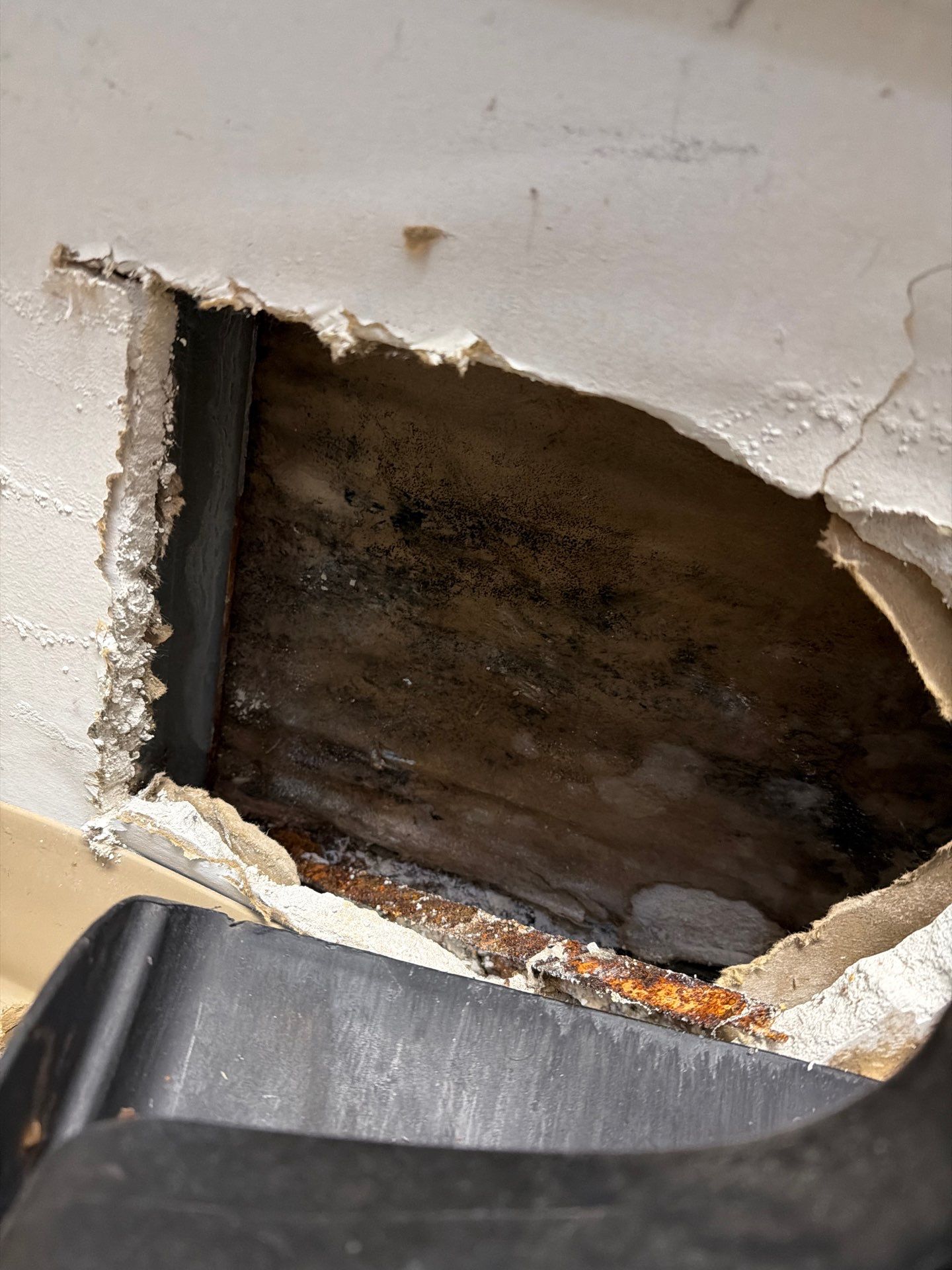
The Bathroom Vanity Call: $480 Total
A homeowner in Spring Hill called us last spring after noticing a musty smell under the kids' bathroom sink. The supply line had been weeping for weeks, just enough to keep the cabinet floor damp without making a puddle. When we pulled the vanity, we found roughly six square feet of surface mold on the back wall and the bottom of the cabinet. No HVAC involvement, no wall cavity penetration, no spore migration into the rest of the house.
This is the cheap end of the curve. Our crew set up a small containment with plastic sheeting, ran a HEPA air scrubber for the duration, removed the affected drywall, treated the framing with an EPA-registered antimicrobial, and cleared the area in a single afternoon. Final bill came to $480, which is right in the ballpark for an isolated under sink job in Spring Hill. If you catch mold while it is still small and dry, you save thousands. That is why we wrote the guide on how fast mold grows after water damage, because the 48 hour window genuinely matters.
What made this job stay cheap was the homeowner's instinct to call the same day she smelled something off. Spring Hill Water Restoration dispatched a crew within 2 hours, and we were able to contain the problem before it migrated up the wall or into the subfloor. Every extra week of moisture would have doubled the scope. By month three, that same call usually turns into a $1,500 to $2,000 job because the vanity, the flooring underlayment, and the adjacent baseboard all have to come out.
The Finished Basement: $4,200
Another Spring Hill family called after their sump pump failed during a thunderstorm. They were traveling, came home four days later, and walked into a finished basement with two inches of standing water and that unmistakable sour smell. By the time we arrived, mold had already started colonizing the drywall, the carpet pad, and a couple of the wood baseboards.
This job hit $4,200, and here is where the money went. We built a full containment around 600 square feet, ran negative air machines, removed and bagged the carpet and pad, cut out drywall to 24 inches above the visible mold line, HEPA vacuumed every surface, applied antimicrobial, and ran air scrubbers for three days. We coordinated water extraction with our restoration side because the two jobs overlap. If you want to see how that side gets priced, our breakdown of water damage restoration cost covers the dry out portion in detail.
Insurance and Pricing
Homeowners insurance sometimes covers mold remediation when it stems from a sudden, covered water loss, like a burst pipe. It rarely covers long term humidity or maintenance issues. We document everything with photos, moisture readings, and itemized scopes so your adjuster has what they need. If you want the full process, our walkthrough on filing a water damage insurance claim applies to mold related claims too.
The Job We Turned Down
Not every call ends with a contract. A Spring Hill homeowner phoned us in a panic after a home inspector flagged "possible mold" on a basement ceiling. We came out for the free assessment, took moisture readings, looked at the staining under proper lighting, and concluded it was old water staining from a long since repaired leak. No active growth, no elevated moisture, no musty odor. We told them to wash the area with a household cleaner and save their money. That call cost them nothing and cost us a couple of hours, but it is the kind of honest answer that keeps Spring Hill families calling us back when something serious does happen.
What Actually Drives the Number
After hundreds of jobs in Spring Hill, here is what we have learned moves the price up or down:
- Square footage of visible contamination, with most residential jobs falling between $500 and $6,000
- Whether enclosed wall spaces are involved, which can add $1,500 to $3,000 for cleaning and treatment
- Material type, since porous items like drywall, carpet, and insulation usually have to be removed rather than cleaned
- Containment complexity, especially in occupied homes where we need to protect adjacent rooms
- Whether post remediation air testing is required by your insurance or your own peace of mind
- Hidden moisture behind walls, which we map with thermal imaging during the assessment
How To Get An Accurate Estimate
Phone estimates for mold work are guesses, and any company that quotes you a firm number without seeing the site is either padding the bill or planning to add change orders later. Spring Hill Water Restoration sends a technician out, usually within 2 hours of your call, to walk the affected area with a moisture meter, check adjacent rooms for hidden spread, and write a scope you can actually compare against other bids. One Spring Hill homeowner showed us three estimates ranging from $1,800 to $9,400 for the same crawl space. The differences were not greed, they were assumptions. The cheap bid skipped containment. The expensive one assumed full subfloor replacement we did not need. A proper assessment is the only way to land on the real number.
The Attic Surprise: $2,750
One Spring Hill homeowner called about a roof leak they had patched themselves a year earlier. The drip stopped, so they assumed the problem was solved. When they finally went up to store holiday boxes, they found a black patch the size of a dinner plate on the roof sheathing and fuzzy growth on the insulation across about 80 square feet.
Attic jobs sit in the middle of the price range because of access challenges and the need to remove and replace insulation. We ran containment at the attic hatch, suited up in full PPE, removed contaminated insulation, HEPA vacuumed the sheathing and joists, treated everything, and re insulated. The final number was $2,750. The homeowner asked why we did not just spray bleach and call it done. The honest answer: bleach does not kill mold in porous materials like wood, and the spores would have returned within months.
Attics also carry a hidden cost most homeowners do not anticipate: ventilation diagnostics. If the original leak was symptomatic of poor airflow or an undersized ridge vent, we flag it before we close the job. Otherwise the customer pays us twice, once for remediation and again next year when the same conditions grow new colonies on freshly installed insulation.