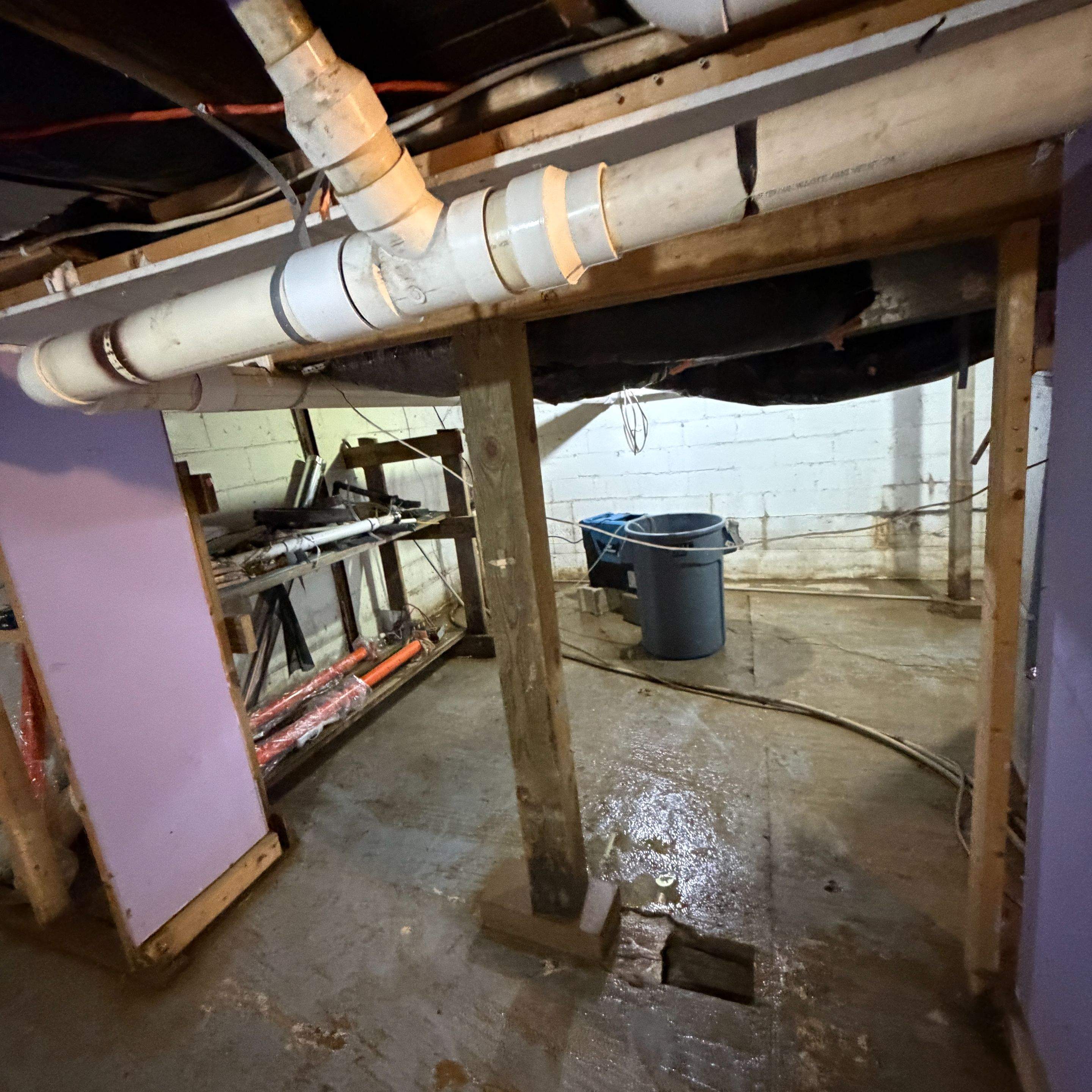
Problem: Your Business Is Closed and Every Hour Costs You Money
A standard Spring Hill retail or office space loses anywhere from $500 to $5,000 a day when forced to close, and food service or medical operations lose far more. The longer water sits, the more flooring, drywall, and inventory cross the line from restorable to replaceable. Most owners try to mop, fan, and hope, which buys nothing but expensive delays.
Solution: Get a Certified Crew On Site Within the First Few Hours
Call a commercial-capable restoration team the moment you confirm the leak. Spring Hill Water Restoration dispatches trucks across Spring Hill 24/7, and we typically arrive within 60 to 90 minutes for emergencies. We bring truck-mounted extractors that pull thousands of gallons per hour, not shop vacs. We isolate affected zones with containment so unaffected sections of your building can sometimes stay operational while we work. For a deeper look at response times and what to expect, our 24 hour water damage emergency response guide breaks down the first-call process.
Speed also matters for inventory. Boxed goods, electronics, paper records, and upholstered furniture can often be saved if removed and stabilized within the first 12 hours. After that, swelling, delamination, and microbial growth start working against you. Our crews stage pack-out operations in parallel with extraction so nothing waits in standing water longer than it has to.
Problem: You Do Not Know What Category of Water You Are Dealing With
IICRC defines three categories. Category 1 is clean water from a supply line. Category 2 is gray water from appliances or seepage. Category 3 is black water from sewage, flooding, or anything that sat long enough to grow bacteria. Treating a Category 3 loss like a Category 1 is how businesses get shut down by the health department a week later.
Solution: Have a Technician Classify the Loss Before You Touch Anything
A certified tech tests the water, inspects the source, and notes how long it has been present. Time changes category. Clean water sitting on commercial carpet for 48 hours can become Category 2. If sewage is involved, we follow strict protocols outlined on our commercial sewage cleanup service page, including PPE, antimicrobial application, and disposal of porous materials that cannot be sanitized.
Problem: Your Insurance Adjuster Is Asking for Documentation You Do Not Have
Commercial policies are stricter than residential. Adjusters want moisture readings, photo logs, equipment-hour records, a scope of work, and proof that mitigation started promptly. Miss one item and your claim can be reduced or partially denied.
Solution: Work With a Restorer Who Documents to Insurance Standards
We use moisture meters, thermal imaging, and daily drying logs from day one. Every affected material is photographed, measured, and entered into Xactimate-compatible reports. We talk directly to your adjuster so you are not stuck translating between two industries. Our documentation has supported claims on losses ranging from $8,000 office floods to six-figure warehouse events across Spring Hill.
We also keep a chain-of-custody record for any contents we pack out, which matters when a claim involves leased equipment, point-of-sale systems, or inventory subject to audit. Property managers handling multi-tenant buildings get a separate reporting packet per unit so cost allocation between tenants and ownership is clean from the start.
Problem: You Are Worried About Mold and Long-Term Building Damage
Mold can begin colonizing wet drywall, ceiling tiles, and insulation within 24 to 48 hours. In a commercial building with HVAC systems running, spores spread fast. A small water event becomes a major remediation project if drying is rushed or skipped.
Solution: Dry to a Verified Moisture Standard, Not by Eye
We follow a three-step structural drying process:
- Extract all standing water and remove unsalvageable porous materials.
- Set air movers and commercial dehumidifiers based on cubic footage, then monitor daily.
- Confirm dry standard with meter readings on wood, drywall, and concrete before demobilizing.
If we find existing mold during the dry-out, we transition into containment and remediation under our commercial mold remediation protocols.
Problem: Your HVAC System May Be Spreading the Damage
In commercial buildings, the HVAC system is often the fastest vector for moisture and contamination to travel. Saturated return air ducts, wet insulation around supply lines, and standing water in mechanical rooms can push humidity into otherwise untouched spaces. Running the system during an active loss can turn a 1,000 square foot incident into a building-wide problem within hours.
Solution: Shut Down, Inspect, and Isolate Mechanical Systems Early
One of our first steps on arrival is to coordinate with your facilities team to shut down affected air handlers and seal duct openings near the loss zone. We inspect ductwork for moisture intrusion, check filter banks, and document any contamination so HVAC cleaning can be scoped separately if needed. Keeping the system off for a day or two is almost always cheaper than cleaning every duct run in the building.
Problem: You Have Tenants, Employees, or Customers Asking When You Will Reopen
Communication gaps make a bad week worse. Tenants want rent abatement answers. Employees want shift updates. Customers want a reopening date.
Solution: Get a Written Scope and Timeline by Day Two
By the end of the second day on most Spring Hill commercial jobs, we provide a written scope with phases, expected drying time (typically 3 to 5 days for moderate losses), and a reconstruction estimate if needed. That document lets you communicate confidently with every stakeholder instead of guessing.
Problem: You Are Not Sure Who Actually Handles Commercial Work
Many residential restoration companies advertise commercial services but do not have the equipment, crew size, or insurance to handle a 20,000 square foot warehouse or a multi-tenant building. You find out the hard way when they show up under-equipped.
Solution: Ask Three Direct Questions Before Hiring
- Are your technicians IICRC certified, and can you provide certificate numbers?
- What is your largest commercial loss in the past year, and can you reference it?
- Do you carry general liability and workers comp at commercial limits?
If a vendor stumbles on those, keep calling. Spring Hill Water Restoration answers all three plainly, and we will tell you on the first call if your loss is outside our scope.